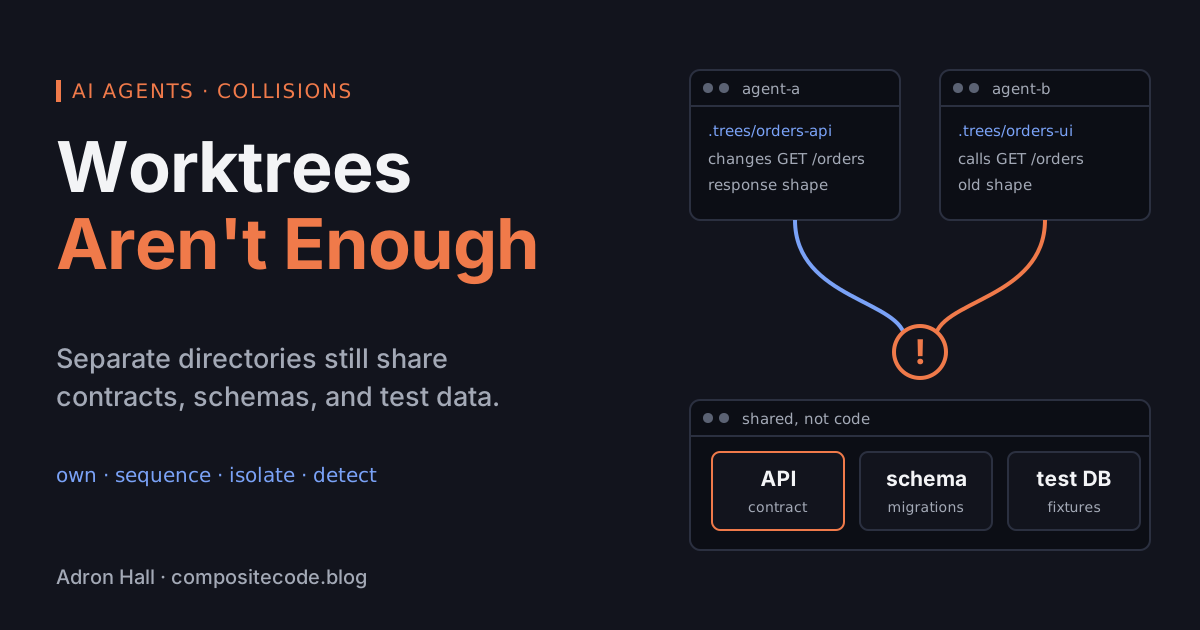
Two developers editing the same service at once is older than Git. One changes an API, the other writes a caller against the old shape. One migration lands, the other assumes the previous schema. The collision may wait until integration, but nobody invented it with coding agents. Continue reading →
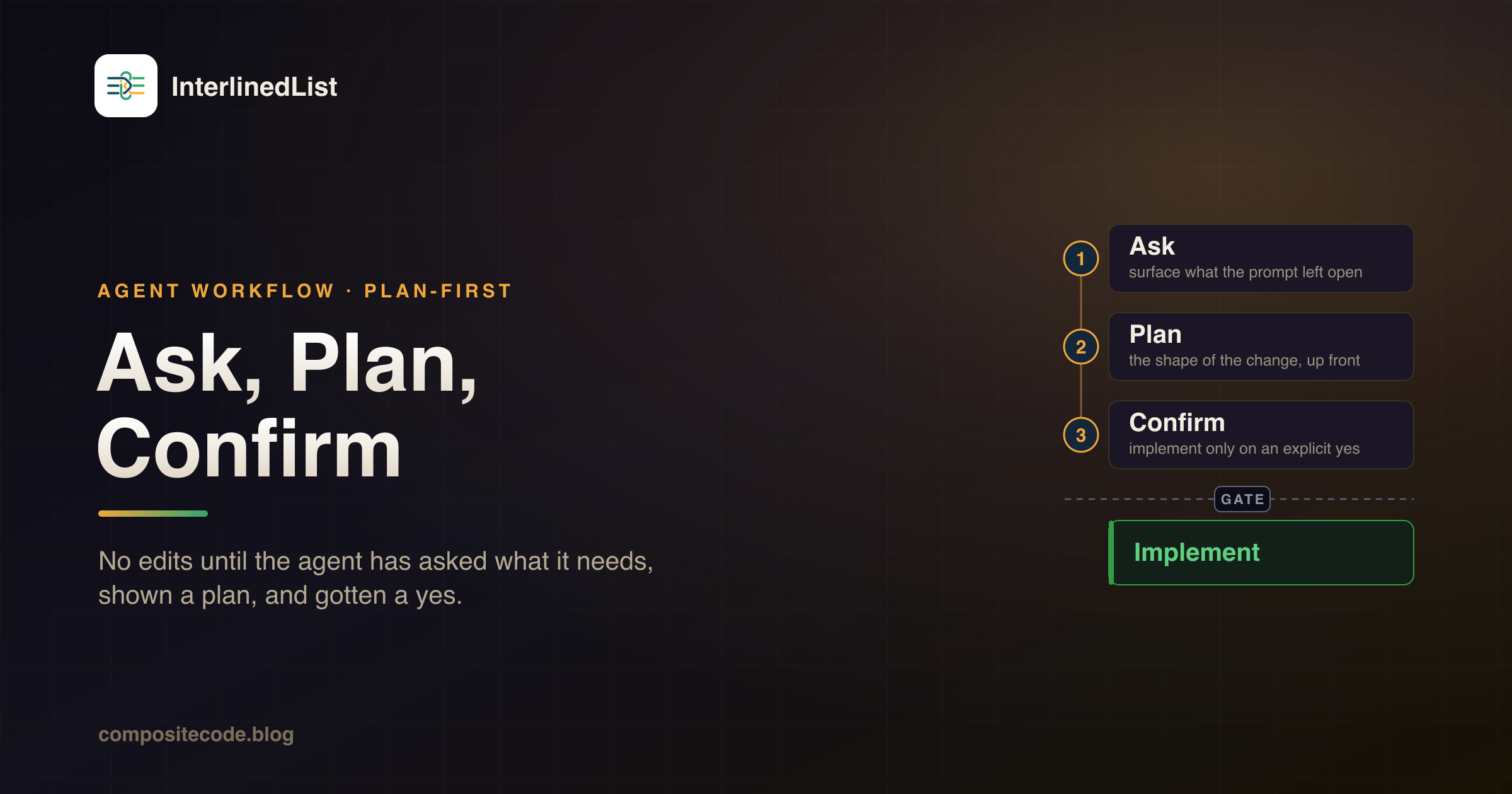
The text emphasizes the importance of a structured workflow for coding agents to prevent unintended changes. By introducing a three-step gating process—Ask, Plan, and Confirm—developers can ensure that agents check for ambiguities, outline necessary changes, and obtain explicit approval before implementation. This approach mitigates risks and enhances code quality. Continue reading →
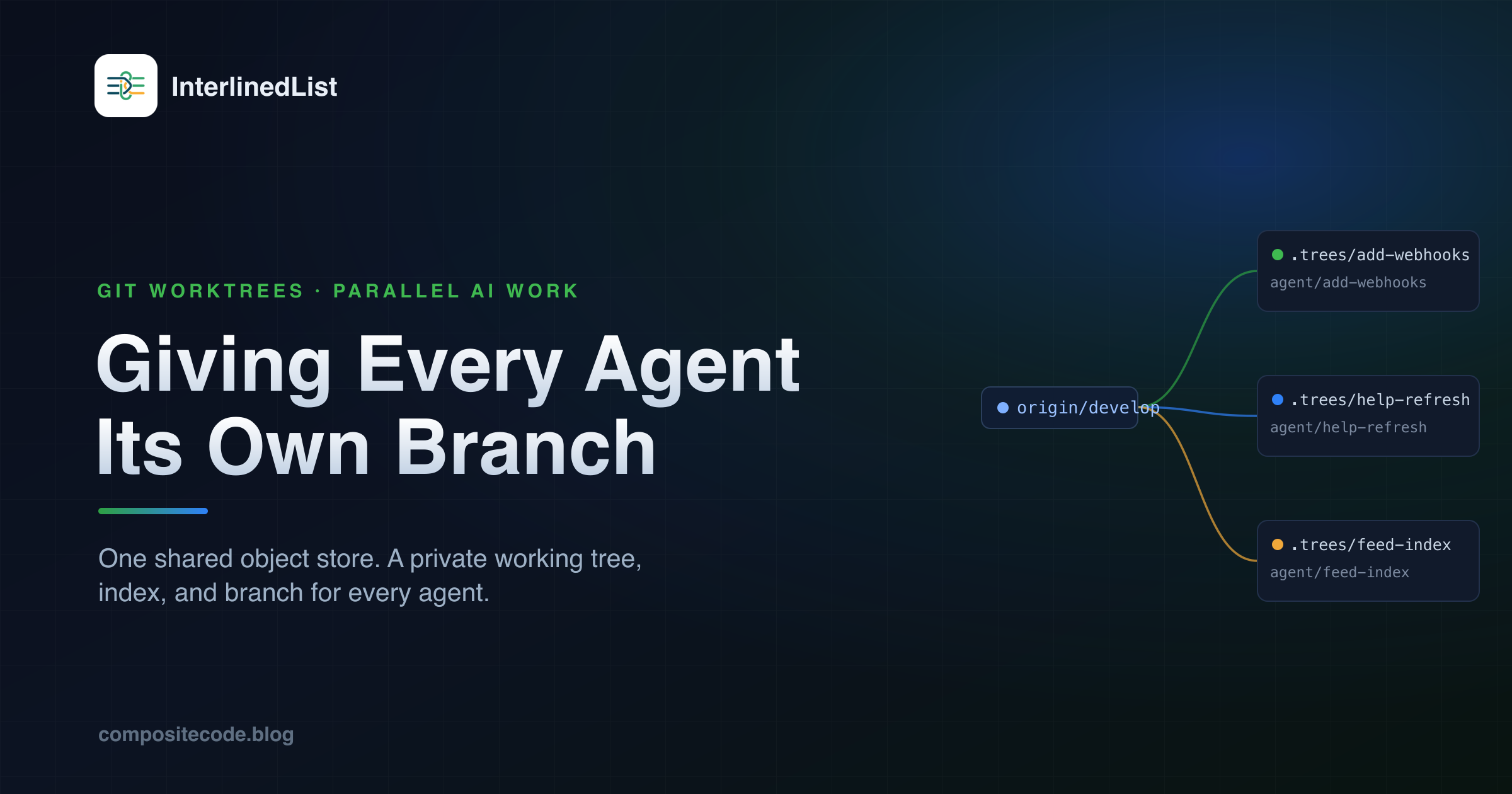
The text discusses challenges faced when using multiple coding agents on a single Git working tree, leading to merge conflicts and lost edits. It emphasizes the need for independent work environments through Git worktrees, which allow each agent to operate in its own directory while sharing an object store. The author details a structured solution... Continue reading →
The piece explores the unique challenges software developers face, particularly with the rise of AI tooling in coding practices. It highlights a specific “pain” associated with AI-generated code changes, which can introduce risks due to their propensity for errors and misunderstandings of existing systems. The author categorizes types of code changes—additive, mutative, destructive, transformative, cosmetic,... Continue reading →