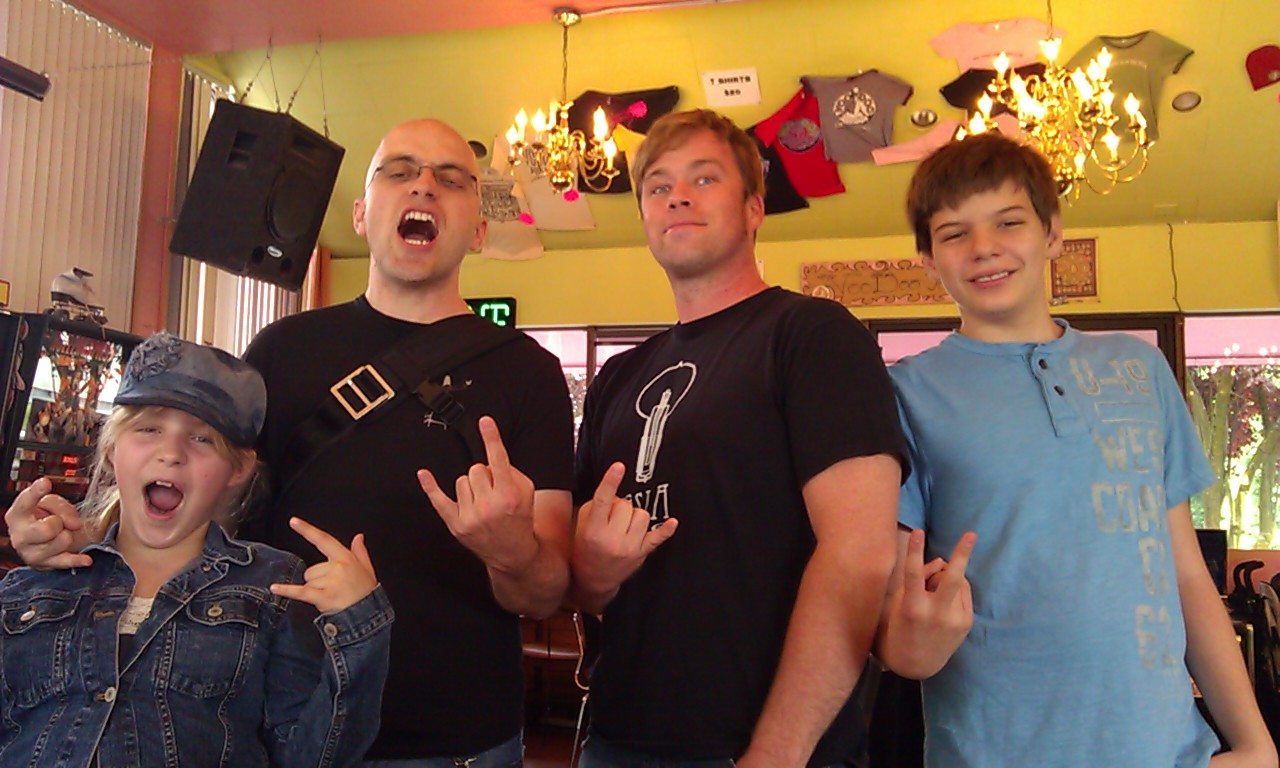
The Adron Code Tour, Let’s Hack, Bike and Talk Hard Core Technology

I’m aiming to do over the first couple of months of 2013, to come to various towns throughout the United States and prospectively parts of Europe & England to code, bike, code some more, bike and generally hang out with the coders that are making waves and getting work done in the particular cities that I’m visiting. That’s where my question comes into play.

What towns should I visit, and who’s interested in hacking some code, talking shop, biking around town, showing me the places to be and generally hanging out? A few of the cities that are on my list of places to visit already include the following.

United States Stops

  • Spokane, Washington
  • Seattle, Washington
  • Portland, Oregon (this doesn’t really count, since I live here)
  • Oakland, California
  • San Francisco, California
  • Los Angeles, California
  • Orange County, California
  • San Diego, California
  • Austin, Texas
  • Phoenix, Arizona
  • New York, New York
  • Boca Raton, Florida
  • Jacksonville, Florida
  • New Orleans, Louisiana,
  • Charlotte, North Carolina

England & Europe Stops

  • London, England
  • Edinburgh, Scotland
  • Berlin, Germany
  • Amsterdam, Netherlands
  • Copenhagen, Denmark

So that’s the list so far. I’ve got a lot of logistics to figure out. But it still leaves the question, who else is up for a visit? Is there a user group in your town that I should stop at? Anything related to PaaS, Cloud Computing, or Coding & Software Craftsmanship you’d like me to come speak about?

The things I’ll be aiming to hack on and blog, code, discuss and find out what each local community is focusing on and trying to make progress on includes these things:

Key Discussion Topics : I’d love to talk with as many people as possible about these.

  • PaaS – Platform as a Service Technologies. What are you using? AppHarbor, AppFog, Tier 3, AWS, Azure or something else?
  • Cloud Computing – What do you see as the greatest benefits, but more importantly what are the greatest issues to resolve and make progress around in your country, community and in your day to day job?
  • What’s the stack, framework and languages that you deal with on a daily basis? What’s your polyglot soup and what trends are you seeing?

Polyglot Soup : Are you hitting the Node.js, .NET, Java, Ruby on Rails, Sinatra or is the focus elsewhere?

  • What’s the feel for Ruby on Rails, Sinatra and the ruby community in general in your area?
  • How’s the Java vs. .NET peacetime activities (cuz ya know the war is over). How are each holding up under Oracle and Microsoft respectively? Are you still using them anywhere?
  • What’s the Node.js community like in your area? Are you doing full JavaScript stack development yet?
  • Hitting any of the outlier languages that have big impacts like; Go, Scala, F#, Erlang or any of the others? Powerful languages with an extremely small development community. I’m always curious about the activities here.

Feel free to send me an e-mail, call me, txt me, message me, skype me, or please comment below! I’m open to all ideas and thoughts. If you have a couch I can crash on, have a suggestion about a cool hotel, an awesome place to visit in one of these cities, please let me know. Over the next few months I’ll be trying to figure out this tour of mine and will be finalizing the locations soon, which I’ll announce and blog heavily on what we’ll hack, etc. I’ll also alude to the biking adventures I’ll partake upon.

Biking wild and coding crazy, cheers!

Deploy a Framework Friday #4 Some Node.js .gitignore Cloud 9 IDE Sharing toward Cloud Foundry / Iron Foundry Deployment

Today’s “Deploy a Framework Friday” is a little bit of a diversion. Today Richard (@rseroter) and I dove into Cloud9IDE (@Cloud9IDE) to try out some pair programming with the online IDE sharing. We made some minor progress with Matt (@matt_pardee) & Eric (@ang3lfir3) jumping in for a few minutes. The intent of this effort was to pull together a little code to deploy, as Richard wrote about a few months ago in the article “Deploying Node.js Applications to Iron Foundry using the Cloude9 IDE“.

Here’s a video of us all fumbling through attempting to get the .gitignore file setup.

Richard Seroter (@rseroter) and I (@adron) took a stab at sharing some code, with the attempt to do some pair programming. We made a little progress, and even had some people join us live via Twitter and edit some of the code with us. For a short play by play, check out the blog entry here: http://compositecode.com/2012/08/03/deploy-a-frame…dry-deployment/

Questions:

  1. Why did the .gitignore not show up on Richard’s Screen?
  2. What were the intermittent errors that came up?
  3. Why did it say I was setup for “premium” but I couldn’t use express?
  4. Is it supposed to be that the other person can’t make changes while someone is chatting?

I’m not sure what happened (anyone at Cloud 9 IDE know what happened) when the .gitignore totally disappeared  but in the video you can see that I committed and pushed the .gitignore file. I had to recreate it to get anything to show up, and initially it didn’t seem to share either. I’m not sure how that is supposed to work, but am assuming something wasn’t setup correctly in the first place.

As for express I’ll be giving that a try a little bit later.

Next Steps Toward Deployment

Over the next few weeks or so, Richard and I will be going back and forth building a Node.js based web application for deployment from Cloud 9 IDE to our Iron Foundry Environment. Overall, this will be a slightly drawn out “Deploy a Framework Friday“, with its own sub-parts to the series.

We’ll culminate the project in an open source project that will be available on Github and also with a summary on the Iron Foundry Blog. In one of our pending blog entries we’ll draw up the architecture of the application we’ll be building out. So stay tuned!

NOTE: Working in conjunction with these other bloggers/blogs:

Sardonic Observations for the Week Ending July 7th, 2012

This is the beginning of another series I’m going to be doing via the blog here. Just a quick week ending summary of the things I’ve taken note of via the media, cool hackathons, startups or other things of that nature. With that simple mission, here’s entry #1.

Meteor Lands $11.2 Million

Gigaom published an article titled “Meteor Rakes in $11.2 Million…” by Barb Darrow (@gigabarb) about Meteor. Meteor is a company that is attempting to redefine, change, alter or do something for or to Enterprise Development. This is good, because enterprise software development generally needs a lot of help. I’m however not sure how they’re intending to do this, or to get the legions of enterprise developers to get more familiar with JavaScript. It can’t be a bad idea since almost everybody on Earth is focusing in some way on JavaScript. So maybe they’ve found a great avenue into the Enterprise?

Who Invented the Internet

First off, let me answer this. The answer is ‘individuals’. Not the stupid Government or the silly Corporations or the … blagh blagh blagh. This argument has been unfolding between the Obama comment, the WSJ, and some other mess. But rest assured, it’s PEOPLE that have brought it to what it is. Not the crappy DOD mandate to “Defend” or even the corporatist “make profit” motive. It’s almost like asking, “who invented society”. Well, people did. Not a Government, those are nothing without people, not a corporation, because those need people too. But trying to scream about who deserves credit is pretty inane. My response at this point is, the individuals, and just shutup already. We have it, make life better now, we’re wasting time arguing about who invented it.  Cheers!  🙂

If you’re curious as to the argument, here’s all the fool’s arguing: Gregory Ferenstein & Vint Cerf Techcruch, Gordon Crovitz at WSJ, and others…  google it, you’ll find the explosion.

AppFog Releases Pricing and a Desire to “Do What Gmail Did…”

Alex Williams wrote up a piece “AppFog Wants to Do For Developer Platforms what Gmail Did for Email” on the recent release of AppFog’s new pricing and related information around their AppFog PaaS. This is great news, as AppFog offers a pretty freaking sweet service for small and mid-size sites. Things may get sketchy as you grow larger, but getting big sites on the service will push further resiliency. AppFog already supports Cloud Foundry based services and will soon support Azure as a back end. Pretty remarkable if you ask me, I’m shocked and surprised they’re making this work. Over time we’ll see how things pan out.

That’s it for now, until next time. Keeping my eyes open to the latest cool tech bits.

Deploy a Framework Friday #3 with node.js + express.js

Time for the node.js “Deploy a Framework Friday”. First get node.js and express.js installed (i.e. npm install express) and then create your node.js application.

adron$ express nodejs

   create : nodejs
   create : nodejs/package.json
   create : nodejs/app.js
   create : nodejs/public
   create : nodejs/public/javascripts
   create : nodejs/public/images
   create : nodejs/public/stylesheets
   create : nodejs/public/stylesheets/style.css
   create : nodejs/routes
   create : nodejs/routes/index.js
   create : nodejs/views
   create : nodejs/views/layout.jade
   create : nodejs/views/index.jade

   dont forget to install dependencies:
   $ cd nodejs && npm install

Once the app is installed open up the app.js file and edit the code so that it reflects what is shown below.

var express = require('express')
  , routes = require('./routes');

var app = module.exports = express.createServer();

// Configuration

app.configure(function(){
  app.set('views', __dirname + '/views');
  app.set('view engine', 'jade');
  app.use(express.bodyParser());
  app.use(express.methodOverride());
  app.use(app.router);
  app.use(express.static(__dirname + '/public'));
});

app.configure('development', function(){
  app.use(express.errorHandler({ dumpExceptions: true, showStack: true }));
});

app.configure('production', function(){
  app.use(express.errorHandler());
});

// Routes

app.get('/', routes.index);

// Cloud Foundry Environment Variables
var port = (process.env.VMC_APP_PORT || 3000);

app.listen(port);
console.log("Cloud Foundry Demo Express server listening on port %d in %s mode.", app.address().port, app.settings.env);

The emphasis is the port variable added for the VMC_APP_PORT. This variable is needed by the Cloud Foundry system to know which port that node will use to host on, which Cloud Foundry will then intelligently map to so you will get the standard default port 80 activity you expect. For more information about all this hosting mess with node.js check out one of my previous write ups on the topic on the New Relic Blog.

Once you’ve setup this file, then just deploy using the with npm support option that states the version of node.

vmc push --version=node06

For more information about deploying node apps with npm module dependencies check out this blog entry on “Cloud Foundry supports node.js modules with NPM“.

All done. Yes, there is more Deploy a Framework Fridays coming up, so stay tuned!

OSCON Day #3, #4, and Friday => Bailey’s Taproom, Cloud Camp, Cloud Foundry, Open Shift, PaaS, vert.x, and so much more…

Tuesday night, as usual ended with great technical conversation at Bailey’s Taproom. Bailey’s is basically the epicenter of the Portland tech scene. Almost every programmer, devops, or technical person either goes about once a month or has this establishment as a regular watering hole! It’s great, the atmosphere is chill, the beer is SUPERB, the beer menu kicks ass (see: Beer Dashboard Kick’s Ass) and the list of fun cool things just continues on and on.

This week of course OSCON adds a little spice to the regular roll call at Bailey’s. There were a number of conversations that broke out, which I’ve broken out the key topics below:

vert.x => To summarize as is written on the site itself, “Write your application components in JavaScript, Ruby, Groovy or Java. Or mix and match several programming languages in a single application. Create real, scalable applications in just a few lines of code. No sprawling xml config. Scale using messaging passing and immutable shared data to efficiently utilise your server cores. Super-simple concurrency model frees you from the hassles of traditional multi-threaded programming.”

Here’s an example from the site in a few of the languages:

Java

import org.vertx.java.core.Handler;
import org.vertx.java.core.http.HttpServerRequest;
import org.vertx.java.deploy.Verticle;

public class Server extends Verticle {
    public void start() {
        vertx.createHttpServer().requestHandler(new Handler() {
            public void handle(HttpServerRequest req) {
                String file = req.path.equals("/") ? "index.html" : req.path;
                req.response.sendFile("webroot/" + file);
            }
        }).listen(8080);
    }
}

JavaScript

load('vertx.js')

vertx.createHttpServer().requestHandler(function(req) {
    var file = req.path === '/' ? 'index.html' : req.path;
    req.response.sendFile('webroot/' + file);
}).listen(8080)

Ruby

require "vertx"

Vertx::HttpServer.new.request_handler do |req|
    file = req.uri == "/" ? "index.html" : req.uri
    req.response.send_file "webroot/#{file}"
end.listen(8080)

Wednesday Roughness

I felt beat up a bit start Wednesday, but rolled into it after a short while. Needless to say, the intensity of conversations (and maybe a few of those rounds of beer) and number of ideas, new things to check out and fitting it all in can wear one out.

The morning sessions were solid, I attended most of “Comparing Open Source Private Cloud Platforms“. Lance did a solid job of laying out the tooling, virtualization software and where these things come together to form a number of OSS options for cloud computing. Check out more from Lance on his @ramereth, his blog Lance Albertson, or check out his band he’s in “The Infallible Collective“.

Wednesday, Thursday and Friday Meets

I met a ton of people. All of whom I must say, I hope to get to talk to again, work with on projects, or just sling some code sometime. Absolutely great people, friendly, intelligent and highly motivated. Some of these people I met included:

Andy Piper (@andypiper) – Part of Great Britain’s contingent of VMware Cloud Foundry advocates and such. We got to hang out and talk about a zillion different topics at a number of events. Andy was kind enough to show me a few tips and tricks he’s been using with Cloud Foundry, the VMC, and in general working with the platform.

Josh Long (@starbuxman) – I met Josh once before on the Cloud Foundry open tour, where he brought COBOL programming… oh no wait, he brought some great Sprint Java samples and such to demo on the Cloud Foundry Platform. I fulfilled Josh’s dreams by telling him that COBOL, could indeed run on Cloud Foundry thanks to the .NET capabilities of Iron Foundry! (ya know, if anybody is into that type of thing)

Erica Brescia (@ericabrescia) – I finally got to meet Erica in person, after chit chatting on Twitter about all the great applications her company Bitnami helps to deploy in the cloud. There are some really great deployment hosting solutions from them, check them out if you’re looking for some streamlined deployment practices. She also mentioned I need to meet…

Jono Bacon (@jonobacon) – I managed to meet Jono by randomness. He’s, well, let’s say he does some absolutely great work in the tech industry for Canonical and in the open source universe. In addition Jono has some superb tastes in music. \m/  \m/Check out some of his work:  Blog, personal site, and you can probably google him too. Do it, he’s got a lot of great material out there.

As I was saying, these aren’t the only people that I met. To all those people I didn’t mention, it was awesome hanging out, catching up and hearing about what everyone is working on and creating.

PaaS, IaaS and The Driving Open Source Coders

On the topic of PaaS, it continues to expand into new realms of publicly (or privately) run services. PaaS is quickly expanding past mere framework services around .NET, PHP, Rails, Sinatra and such and moving into the realm of databases, services buses, and other capabilities as a service. As laid out with the SOA mindset. Even though enterprises failed to bring SOAP to an effective worldwide use, RESTful services are expanding rapidly. *aaS is pushing those even further, to do what the enterprise had wanted but failed to do. Creating a universal acceptance of scalable, powerful, expandable and extensible services through APIs.

As more services are extended we’ll start seeing a lot of offerings around truly scalable databases with various feature sets around those databases offered as a key service. Examples would include “atomic database as a service”, “transactional data store as a service”, or “document store as a service”. In the end it will include the amount of usefulness for the services while eliminating a need to know each in intimate detail. Knowing the core capabilities of an option and just using the service will grossly outpace the attempt to implement these services internally.

So keep watching PaaS to grow in many various ways. Consuming the service being the driver over attempting to build the service. Of course, if the service doesn’t exist, get on that it’s business opportunity!

Random OSCON Diversions

I had a great time visiting with family while at OSCON also. To whom they all send a hello and horns up, thrash on salute to the coders of the world!
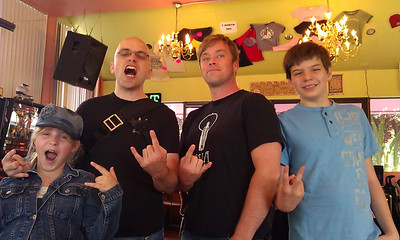
Voodoo Donut Break with Florida Family Contingent

Voodoo Donut Break with Florida Family Contingent.

My brother Adam, the IT Department

My brother Adam, the IT Department

My Brother Runs an IT Shop of One…

…thanks to cloud computing capabilities.

This kind of blew my mind. I sort of of knew what he did, but it didn’t hit me how close our professional lives are until this trip. He’s just recently moved several hundred miles away from the main office, but still manages the entire company.

One of the unique happenstances is, my brother (the guy next to the bald guy that is me, he’s wearing a Tesla t-shirt) is the top IT guy for a little billion dollar a year company. Which, in this case, he’s proven the power of cloud computing. Why do I say this? Because traditionally this organization would have needed an army of PC techs, network knob fiddlers, and such. But with the advantages of cloud computing, both on premise and off premise, and have a DevOps Guy that knows what he’s doing they are able to efficiently run their entire company with one single guy.

Needless to say, with the synergy of OSCON we had more than a few conversations around tech. Some of those included the replacement of PCs with mobile devices, such as iPads or smart phones. Another was the mix of on-premise data that couldn’t easily be transferred or utilized form cloud services. These are just a few fo the things that have helped him to run the show, the entire show.

Summary

OSCON was awesome. Next time I will be taking off a day or two before and a day or two afterwards so that I can do an even more elaborate write up of the event. My aim is to have interviews, video and otherwise, and really step it up in relation to providing an eye into the event from a developer’s point of view.