Adam & Krishan Got Me Motivated Today… to toss the trash conversations

I was speaking with Krishan Subramanian (@krishnan) and Adam Seligman (@adamse) today. I love talking to these guys. They’re both smart, intelligent and upbeat guys. They see the positive things we’re all working toward and accomplishing in the technology space, specifically around PaaS, Cloud Computing and around the cultural implications of stronger technology communities, involvement of individuals. We all can see the positives, of how the industry is moving forward so that corporations aren’t the only enablers that are juxtaposed against developers or consumers but instead act to serve consumers based on the progress that individuals make themselves. There’s so much to do and so much progress to be made, the venders can simply follow the community and step up to provide points of leadership.

Absolutely great talking with these guys…

On that topic, what is it that we discussed that has me so motivated? Well there’s a few things that I’m done with and I’m going to make every effort to just throw away the trash. Here’s a few of these things that we discussed and I challenge everybody out there, drop the trash talk and let’s move forward because there is a LOT of awesome things to accomplish. Here’s the two things I’m just dropping…  cold. No reason to discuss them anymore.

  • Toss the language and framework religious wars. It is far simpler than it is sometimes perceived. We have a polyglot industry now where we can easily use the right tool for the job, the right framework, or the language that handles our particular domain the best. There is literally no reason to argue about this anymore. Of course we can talk semantics, debate best use cases, and of course we’ll talk accomplishments and what various things do well. That’s exactly what the focus should be on, not the harping on my X is better than your Y nonsense.
  • The culture war is basically over. Sure there are the hold outs that haven’t gotten a clue yet. But it’s an open source world at this point. Even the dreaded and horrible Oracle has generally conceded this and is frantically waving its marketing arms around trying to get attention. But at the core, mysql, java and the other things that they’ve purchased they’re keeping alive. They’re active participants in the community now, albeit in a somewhat strange way. Considering that even Oracle, Microsoft, Apple and so many others contribute back to the open source community in massive ways, that war can be considered won. Victory, the community and every individual in that community!
  • Lockin is basically dead. The technological reasons to lock in are gone, seriously. There’s some issues around data gravity that are to be overcome, but that’s where a solid architecture (see below) comes in. Anything you need can be contributed to and derived from the development community. Get involved and figure out how technology can be a major piece of your business in a positive way. If you design something poorly, lock in becomes a huge issue. Use the rights tools, don’t get into binding contracts, because in the polyglot world we’re in now there’s no reason to be permanently locked in to anything. Be flexible, be where you need to be, and make those decisions based on the community, your support systems, and your business partners. Don’t tie yourself to vendors unless there is mutual reasons to do exactly that. Lock in is a dead conversation, just don’t, time to move on.

So what are the key conversations today?

  • Ecosystem Architecture – If you’re deploying to AWS, Heroku, Tier 3, AppFog or Windows Azure it all boils down to something very specific that will make or break you. Your architecture. This is where the real value add in the cloud & respective systems are, but there are many discussions and many elements of the technology to understand. This is a fundamentally key conversation topic in the industry today. Pick this one up and drop the other trash.
  • Movement & Data Gravity – How do you access your data, how do you store it, where and how do you derive insight from that data? This is one of the topics that came up in our discusssion and it is huge. The entire computer industry basically exists for the reason of insight. What should we eat today, how do I shift my investments, how is my development team doing, what’s the status of my house being built, where is my family today and can I contact them! All of these things are insights we derive from computer systems. These are the fundamental core reason that computers exist. As an industry we’re finally getting to a point were we can get some pretty solid insightful, intelligent and useful information from our systems. The conversation however continues, there is so much more we can still achieve. So again, drop the wasteful convo and jump on board the conversations about data, information and insights!
  • Community Involvement – I’ve left the key topic for last. This is huge, companies have to be involved today. Companies aren’t dictating progress but instead the community is leading as it should. The community is providing a path for companies to follow or lead, but the community, the individuals are the ones that are seen and known to be innovating. This is so simple it’s wild that it is only now becoming a known reality – companies don’t innovate, people do. Companies don’t involve, people do. Individuals are the drivers of companies, the drivers of Governments, they’re the ones driving innovation and progress. The focus should now and should have always been on the individuals and what they’re working toward to accomplish. So get involved, get the companies involved as a whole and keep the semantic ideal of individuals and the progress they can make core to the way you think of communities. The idea of the “company” innovating is silly, let’s talk and build community with the people that are working around and innovating with these technologies.

Of course there are more, I’d love to hear your take on what the conversations of today should be about. What do we need to resolve? How do we improve our lives, our work and the efforts we’re working toward on a day to day basis?
In My Dreariness, I Installed Cloud Foundry and extended it with Iron Foundry

Morning!

I put together a video late last night based on setting up a Cloud Foundry instance with Iron Foundry extensions. It’s a little long, since I’ve mostly *not edited* it. The instructions have been available for a while but I thought, why not make a video and publish it. In the very near future we’re going to start laying out specifics on how to install individual elements of Cloud Foundry and Iron Foundry. We’ll also be providing deeper detail of exactly what these parts do, what is needed, and how to scale a non-micro environment.

Cloud Foundry + Iron Foundry from Adron Hall on Vimeo.

Cloud Foundry + Iron Foundry for a full framework list of options. This video shows the steps to get a Cloud Foundry Micro instance up and running, then get an Iron Foundry instance up and running, connect them and then view a full list of frameworks.

NOTE: This video is barely edited, so it is a little long because everything is mostly done in real time.

This shows how easy this really is. If you’re using any other PaaS software, especially if you’re trying to setup local development environments, I’d love to hear about your processes and also any ideas on how we could make this process easier. In the near future I want to put together a video showing Stackato too. They have a nice offering to get a similar environment setup with more UI elements, making it a bit easier to keep track of all the applications and such.

How Software Should Get Done, Continually Delivering!

Tonight I spoke at the PADNUG Meetup in Hillsboro, a suburb of Portland, Oregon. The ladies and gentlemen of PADNUG are a great crew, so I actually go out of my way to the suburbs to speak there. Tonight was an exceptionally good experience with a great talk, lots of back and forth between everyone there and great conversations continued late into the night at the local suburban watering hole. All in all a good topic of conversation and one that needs brought to more teams.

Continuous Delivery

How does this fold into my work on PaaS (Platform as a Service) and IaaS (Infrastructure as a Service)? Easy, with the cloud computing capabilities of PaaS and IaaS it makes continuous delivery a no brainer. At least 50% of the effort to get continuous delivery setup is already done with these technologies. Over the next few weeks I’ll be writing a lot about these technologies and the enablement of continuous delivery through these technologies. Just as important as the technology, I’ll also be talking about the processes, ideals and lean thinking that have birthed this tech.

In my presentation I covered a lot of these ideas and efforts. For now, here’s my slide deck with all the information to contact me. If you’d like me to pop into your town and present on these topics, just let me know and we’ll see about me getting onsite.

Coming up on the 20th I’ll be presenting some of this material plus a very hands on demo at the Software Craftsman’s meeting is Seattle titled “Coding in the Cloud, Kick Ass Continuously“. So if you live in the Seattle or are just in the area, drop in!

Thor – Cool Objective-C Bits, Libraries and Code Snippets [[TheSeries alloc] init];

Benjamin Van Der Veen (@bvanderveen) has been working with me to build out the Thor Application  based on Nathan Young’s (@nathanyoung) awesome designs. We’ll be releasing open source real soon. I wanted to cover some of the cool libraries, specific code snippets and such. These are a few of the things that have come in very useful as the coding deluge began.

Reactive Cocoa (AKA Reactive Extensions)

When you need to compose and transform sequences of values (kind of like Reactive Extensions for .NET) this is your library when working in Objective-C land. Reactive Cocoa or “RAC” for short can observe on key values to provide a key value for compliant properties. RAC helps to keep mutability under wraps (which is really really needed in Objective-C), pulls together behaviors and relationships between properties, and helps tremendously with asynchronous actions. The last bit we have a good amount of occurring with Thor since it talks to the Cloud Foundry web service API end points.

An example I snagged from the github site is below. It watches for changes on the username property.

[RACAbleSelf(self.username) subscribeNext:^(NSString *newName) {
    NSLog(@"%@", newName);
}];

Which serves, as pointed out in the README.md (be sure to read it if you’re going to use the library), as a wrapper around KVO. It goes on to show further sequences on complex actions.

[[[[RACAbleSelf(self.username)
    distinctUntilChanged]
    take:3]
    where:^(NSString *newUsername) {
        return [newUsername isEqualToString:@"joshaber"];
    }]
    subscribeNext:^(id _) {
        NSLog(@"Hi me!");
    }];

For some that write C# all the time this might seem like a “meh” moment. But considering the work that would be needed in Objective-C usually this could take significantly more lines of code, such as setting an observer, using a property or something to watch the value, monitor the non-distinct changes, and then bounce the value of the property for every non-distinct value. Yeah, and it still isn’t done. But anyway, that’s just the icing, the cake is delicious. If you’re in Objective-C land much, it is worth checking out.

Check it out on Github.

The Bad, The Ugly and The Good Bits :: Sexism, VMworld 2012 & Smart Cool People

The Divide in Technologists…

Sexism & Those That are Building Tech

There seems to be a pretty distinctive divide in the technology industry today. There are the young, open minded, devop oriented, free-thinking individuals and then there are the old guard of IT. This later group still brings the “booth babes” and finds an incessant need to assume all women aren’t technologists (which I might add is utter bullshit). This is when I’m going to rant for a minute.

[rant=on]

Ok guys, pull your heads out of your collective asses. I’ve spoke to 11 ladies that are hard core technologists, that would take your old guard IT and replace your sorry ass with a shell script plus some cloud computing and leave you to the dogs. They’re programmers, devops pros, hackers and entrepreneurs  Simply, they kick as much ass as anybody, so shove off.

This however brings up the question, “Why the hell does the conference still perpetuate this bullshit with booth babes and mindless dribble?”  Seriously, can we focus on the technology, the reason we’re here? To learn, to build, to maintain, create and extend our services and capabilities that we work with? Can we not have a mass of “talent” come and stand around just so aging IT guys can ogle their breasts with roaming eyeballs?

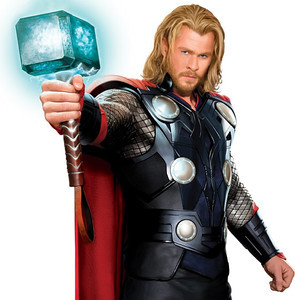
Don’t get me wrong, beautiful people are great, and when done tastefully things can be fun. One of the ladies I work with mentioned it’d be great if Thor showed up and hung out at the conference (cuz ya see, we have a product called Thor, and this data company had Data attend. (Brent Spiner)).

I could go on. Simply put, companies and conference organizers need to own up and get with the times. For those of us that are a little evolved past nuckle dragging we should stand up to this time of nonsense. There’s a reason we’re at a conference and it damn well shouldn’t be to devalue people as objects and ogle various body parts.

[rant=off]

Ok, back on track with the successful bits. There were, after all a lot of successful bits and the sexism is a small, yet very sad and noticeable part of the event. The other good news is the amount of women’s groups that are getting together these days to code  (and I also find it unfortunate that to create a positive environment, women usually have to entirely disengage with men, and it is generally men’s fault)  Yup I said code. Rails Girls, Code n’ Splode and many others. So if you’re reading this and are female, check these groups out and get hacking & devoping.

The Big Move, PaaS is Starting to Rock!

VMware made serveral announcements around Cloud Foundry, which is pretty huge. The momentum is still growing, the community is still growing, and the energy is contagious. There’s been some egregious accusations and suggestions that the Cloud Foundry ecosystem is going to collapse. This is, however one of the more absurd notions I’ve heard in months. This definitely falls into the category of FUD flinging with no concrete notion. Lucas (@cardmagic) from AppFog lays out a bit of reality though, and the 20k people at VMworld and the thousands using and hundreds coding to Cloud Foundry give a resounding shout of,

“HELL NO”

Cloud Foundry is not collapsing, VMware is not taking an unfair advantage, and they’re in a position to win along with all the rest of the advocates of PaaS and open source. The thing is, things can indeed be win-win. They don’t have to be win-lose and the later thinking is negative to the industry and counter to the reality of open source.

Either way, toss any ideas this is going away out of your minds. I know most of you already have.

Smart People, Networking and a Few Rounds

The greatest thing about these conferences is the ability to network and meet face to face with hundreds of people that I do business with everyday. These range from people I hack code with, to people I help implement Cloud Foundry or people that simply are involved in the community too. To me, the most valuable ROI is the networking at a conference. Just to throw a few out there, I got to catch up with…

  • Dave McCrory @mccrory – This guy is awesome, if you get to work with him you’re a lucky soul. He’s heading up WMG as SVP of Platform Engineering now to get some cool things built and build out a solid team, which I look forward to hearing about!
  • Andy Piper @andypiper – Andy is VMware’s Cloud Foundry Dev Advocate of Great Britain. I got to meet Andy a while back and got to team up with him and many others to catch up on Cloud Foundry, see were things are heading, talk through some ideas and generally cause mischief around San Francisco.
  • James Watters @wattersjames – I always love running into this guy. Top notch smart, snarky and always ready to go through who’s who and who’s doing what in cloud technology. He’s the VMware Director of Ecosystem for Cloud Foundry and they’re damn lucky to have this guy!
  • Brian McClain @brianmmcclain – When I was originally writing Brian’s name out, I mispelled it “brain” and almost just left it this way. Brian is all over the Cloud Foundry realm working with BOSH, pushing forward with Cloud Foundry in an enterprise environment, and generally always ready to dive into the tech heavy deep end. Always great chatting with Brian about the details and whatever random code adventures come up!

…and there were dozens of others I got to catch up with. Mark Kropf, Ken Robertson, Daine Mueller, Jeremy Voorhis and almost got to catch up with Derek Collison too. Well, there’s always the next trip to San Francisco! If you’re into the Cloud Foundry space, into PaaS technologies, or just interested definitely reach out, follow these guys on twitter, and make an effort to meet them.

VMware’s VMworld Summary

VMworld was good times, for sure. There were the hiccups as I pointed out, but overall a great experience, the organizers did a solid job (still would help if they could crack down on the companies that perpetuate sexism and BS over content on the booth/show floor, but otherwise, kudos on a job well done). It was great catching up with the brain power in the industry and finally meeting many people I’d been wanting to. I even wrote more than a few lines of code and tested out a few deployment ideas based on the conversations. This, in the end, is exactly what the conference is truly about.  Cheers!