Coder’s Vacation : My Slide Deck for the Upcoming HTML 5 Developers Conference

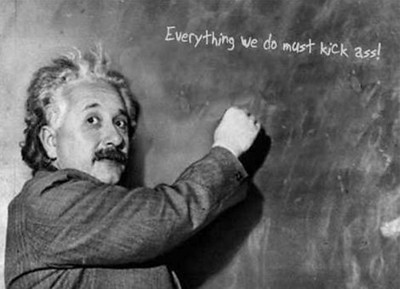
Continuously Kicking Ass

Continuously Kicking Ass

Web development isn’t always easy. Really, there isn’t a form of application development that is easy, there’s a lot of steps, tools, and other traps to coding. One of the best unifying ways to insure that all this complexity doesn’t kick your ass, is to implement continuous integration & delivery practices. I’m going to cover that in a talk this Monday at the HTML 5 Developers Conference in San Francisco. As a precursor to the talk, here’s my slide deck… which I’ll admit isn’t the whole kit and kaboodle, because I will haz codez so subscribe and those I’ll be publishing during this Coder’s Vacation of mine.

NOTE: Pending on levels of connectivity, I’ll be showing a number of details, examples and a little code on implementing continuous integration for JavaScript, specifically with vows and Node.js elements.

Cheers!

Coder’s Vacation : #RICON2012 Photos So Far…

All of these images can be viewed here: http://adronhall.smugmug.com/Software/Meetups-N-Conferences/RICON-2012

San Franciscans heading to work, to RICON and wherever they want to.

San Franciscans heading to work, to RICON and wherever they want to.

RICON 2012 SWAG.

RICON 2012 SWAG.

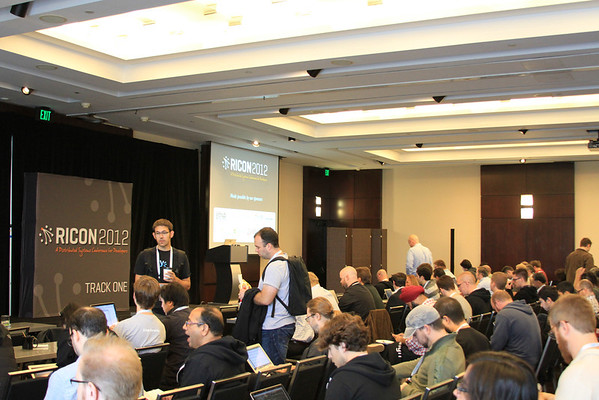
Main Room Filling Up...

Main Room Filling Up…

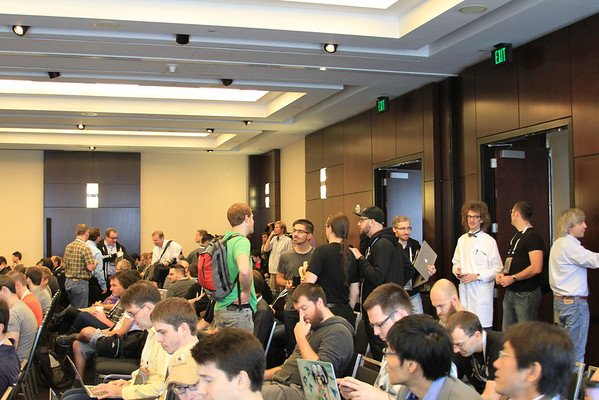
...and filling up some more.

…and filling up some more.

Basho Crew taking care of conf biz...

Basho Crew taking care of conf biz…

...handling the room.

…handling the room.

The Basho team including Tom Santero @tsantero, Shanley Kane @shanley, and others rocked putting things together and getting everything to us attendees and making sure we headed off like herded cats in appropriate paths to the sessions. Great job! You guys rocked it!

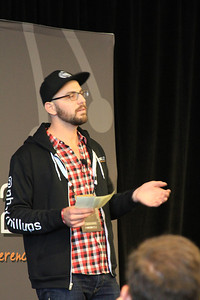
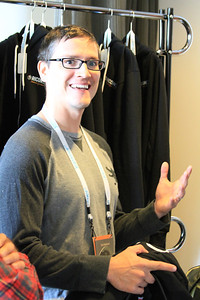
Mark kicking things off...

Mark kicking things off…

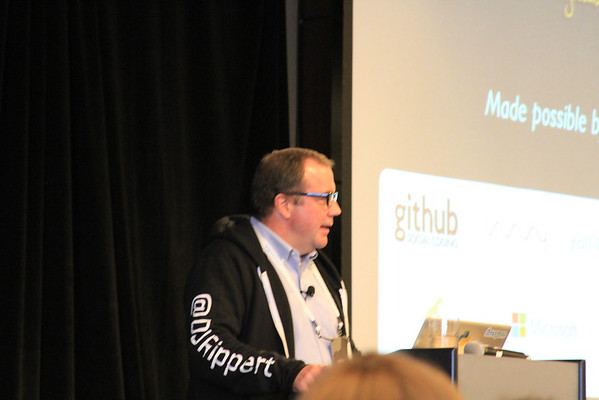
All of this hard work setup for a great conference experience with content and more (see my previous blog entry for more). But I digress, on to more pictures. To the right Mark Phillips @pharkmillups kicking off the conference. Below is Don Rippert @djrippert giving an intro, where he pointed out a very important notion, “…this big movement isn’t about cloud or nosql, the movement is about distributed systems…”.

Dan Rippert Basho CEO

Dan Rippert @djrippert Basho CEO

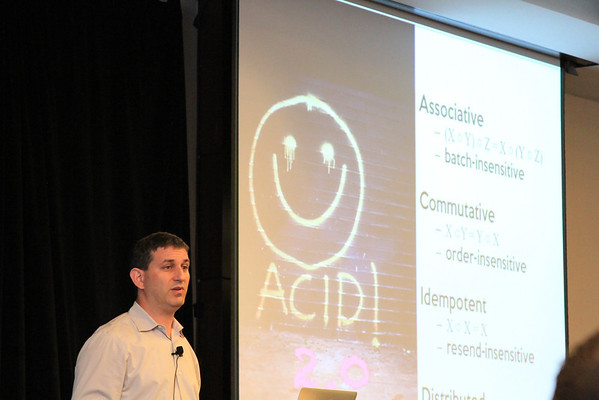
Talking ACID. Absolutely great talk by Joseph Hellerstein, Professor, UC Berkeley

Talking ACID. Absolutely great talk by Joseph Hellerstein @joe_hellerstein, Professor, UC Berkeley

Portland Representing, Selena Marie Handling the Postgresql Preso

Portland Representing, Selena Marie @selenamarie Handling the Postgresql Preso

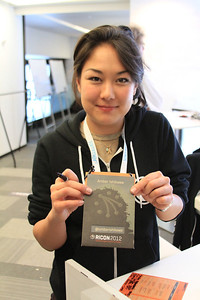
Amber handling the logistics, thanks for finding my hoodie when it disappeared!

Amber @amberishikawa, thx for finding my hoodie when it disappeared!

Portland Basho Office Representing, Eric Redmond, database guy @coderoshi

Portland Basho Office Representing, Eric Redmond, database guy @coderoshi

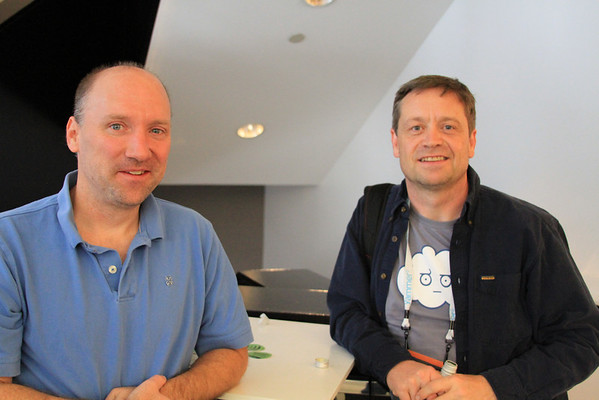
George Reese @georegereese & James Urquhart @jamesurquhart

George Reese @georegereese & James Urquhart @jamesurquhart

George & James, when not at baseball games or thrashing some guitar do some distributed computing system things over at Enstratus. Both of these guys write some seriously solid material, so hit the google and do a search on these guys, then read their books & articles. Cheers guys, good to catch up!

Coder’s Vacation : Getting Some Names…

Actual Live Status of the NameFactory Project

One of the things I’ve started working on is a #PhatData (re: my renamed version of big data) sample. So far what I’ve created is a JavaScript Application that works something like this. (The actual build status is shown to the right here in the “build status” image)

Step #1: Continuous Integration

The first thing I did was setup a solid node.js project that works on Travis CI (Continuous Integration). This is a pretty quick process. First create a directory and add an appropriate .gitignore and README.md file.

$ mkdir NameFactory
$ cd NameFactory/
$ git init
Initialized empty Git repository in /Users/adron/coderz/NameFactory/.git/
$ git remote add origin git@github.com:Adron/NameFactory.git
$ mate README.md
$ mate .gitignore

The mate command is merely textmate, use whatever you’d like though to create the files. I also use Sublime 2 and other things, textmate just happens to be the poison I often choose from the command line. The .gitignore has the following to take care of WebStorm and other files that might pop up.

*.idea
.idea
idea
.DS_Store
*.DS_Store

lib-cov
*.seed
*.log
*.csv
*.dat
*.out
*.pid
*.gz

pids
logs
results

node_modules
npm-debug.log

The README.md I just put the following in. You don’t really need this, but I’m showing you what should be put in a minimal project. In addition to being a good practice, we’ll need the README.md file for plugging in Travis CI in a few steps.

Name Factory
===
Description: This is JavaScript Node.js Project for generating random names.

Commit those files.

$ git add -A
$ git commit -m 'Adding gitignore and README.md.'
[master (root-commit) 14b1cf8] Adding gitignore and README.md.
 2 files changed, 23 insertions(+)
 create mode 100644 .gitignore
 create mode 100644 README.md
$

Once that is added there are some other files needed for Travis CI that I’ll add before flipping on the actual CI project on the Travis CI Website. First add a .travis.yml file to the project.

language: node_js

# test on two node.js versions: 0.6 and 0.8
node_js:
  -- 0.6
  -- 0.8

The packages file should look like this.

{
  "author": "Adron Hall <adronhall@gmail.com>",
  "name": "NameFactory",
  "description": "A library that creates randomly generated names for insert into various databases.",
  "version": "0.0.1",
  "homepage": "https://github.com/Adron/NameFactory/wiki&quot;,
  "main": "./lib/names",
  "repository": {
    "type": "git",
    "url": "git@github.com:Adron/NameFactory.git"
  },
  "scripts": {
    "test": "vows --spec"
  },
  "engines": {
    "node": ">= 0.4"
  },
  "dependencies": {},
  "devDependencies": {
    "vows": "0.6.x"
  }
}

At this point add a few tests that you know pass. I added the following examples from the vows site (this is the default example on the site).

var vows = require('vows'),
    assert = require('assert');

// Create a Test Suite
vows.describe('Division by Zero').addBatch({
    'when dividing a number by zero': {
        topic: function () { return 42 / 0 },

        'we get Infinity': function (topic) {
            assert.equal (topic, Infinity);
        }
    },
    'but when dividing zero by zero': {
        topic: function () { return 0 / 0 },

        'we get a value which': {
            'is not a number': function (topic) {
                assert.isNaN (topic);
            },
            'is not equal to itself': function (topic) {
                assert.notEqual (topic, topic);
            }
        }
    }
}).run();

…now make sure the tests run ok…

$ node test/names_object_should_exist.js
··· ✓ OK » 3 honored (0.003s)
$

So that’ll get the continuous integration via Travis-CI for NameFactory up and running, with a Github NameFactory Repository that is ready for the name generation code to be added. For my next blog entry I’ll leap into some generation strategies, dig up some good name lists (if you know of any, leave a comment w/ a link), and work on figuring out the fastest way to generate names.

Once that’s done, it’s time to setup some distributed databases. Shout it

Coder’s Vacation : #RICON2012 Shreds the House!

Here I am on day #3 of my Coder’s Vacation and RICON is happening today. This is a new conference put together by the fine folks at Basho, maker of Riak (which note, is a link to the project on Github because Basho is awesome like that, they roll all open source like). However, it’s a little different and way more honest than most conferences put on by a company. Sure, there’s talk about Basho and Riak and such, but overall the conference is about distributed systems. The byline of the conference, “A Distributed Systems Conference for Developers” is not a lie. It’s hard core about systems, data and getting things built by and for people who have ideas and know about how to put these things together. To summarize RICON in one phrase, it is “BAD ASS!” Hit up the #ricon2012 twitter stream for more on this.

Conference Kick Off:

Don Rippert of Basho (CEO) took the stage and brought up one of those points, that many in the industry take for granted, but it is rarely spoke. He pointed out, and I’m paraphrasing here, that the cloud, cloud computing, nosql and all these other things really amount to one giant shift i computing. That giant shift is a move to a better way combining things together through distributed systems. Simply put focusing on nosql or cloud or whatever word that marketing and the media latches onto is just a distraction. The real focus comes down to distributed systems. Sometimes, the smartest thing to state is the obvious thing, because nobody else is pointing it out. That simple thing brings about a greater realization of what is important versus what is just noise.

That leaves me with the question though, are we as an industry starting to get it? I think that’s a good question.

Joseph Hellerstein, Professor, UC Berkeley

…with a little about him from the RICON site:

Joseph M. Hellerstein is a Chancellor’s Professor of Computer Science at the University of California, Berkeley, whose work focuses on data-centric systems and the way they drive computing. He is an ACM Fellow, an Alfred P. Sloan Research Fellow and the recipient of two ACM-SIGMOD “Test of Time” awards for his research. In 2010, Fortune Magazine included him in their list of 50 smartest people in technology, and MIT’s Technology Review magazine included his Bloom language for cloud computing on their TR10 list of the 10 technologies “most likely to change our world”. A past research lab director for Intel, Hellerstein maintains an active role in the high tech industry, currently serving on the technical advisory boards of a number of computing and Internet companies including EMC, SurveyMonkey, Platfora and Captricity.

I also really enjoyed his talk. He took a correlation between distributed systems, data and the British Empire. Correlating things, especially complex and advanced things to something like the British Empire just adds an entertaining twist to it all. Again, a description from the RICON 2012 Site:

Conventional distributed systems wisdom dictates that perfect consistency is too expensive to guarantee in general, and consistency mechanisms—if you use them at all—should be reserved for infrequent, small-scale, mission-critical tasks. Like most design maxims, these ideas are not so easy to translate into practice; all kinds of unavoidable tactical questions pop up, e.g.:

– Exactly where in my multifaceted system is loose consistency “good enough” to meet application needs?

– How do I know that my “mission-critical” software isn’t tainted by my “best effort” components?

– How do I ensure that my design maxims are maintained as software and developer teams evolve?

Until recently, answers to these questions have been more a matter of folklore than mathematics. (One way to tell the difference: a good answer is enforceable by a compiler.)

In this talk, I will describe the CALM Theorem that links Consistency And Logical Monotonicity, and discuss how it can inform distributed software development. I’ll also give a taste of Bloom, a “disorderly” distributed programming language whose compiler can automatically answer questions like the ones above. Along the way, I’ll try to shed light on side questions like “Should Paxos exist?” and “Causality: What is it good for?”

More updates, and the code for my #PhatData Project are coming up. So subscribe, stay tuned, keep reading it’ll be up soon. Cheers!

Coder’s Vacation : Preparation “RICON 2012, HTML 5 Developers Conference and Loading Up”

This next week I’m off to San Francisco for a coder’s vacation. I don’t exactly know what a coder’s vacation is but that’s what I’m aiming to define! I’ll put together a description of my idea of a coder’s vacation below. There are going to be several components about this vacation that really make it a coder’s vacation, such as:

  1. My trip is to San Francisco – This makes it an ideal place to be, as a coder, to hone one’s skills and meet the top people in startups, software and other areas. There is literally coding happening all over the city. Plus it is a fairly nice city to frequent to begin with.
  2. I’m Traveling via the Coast Starlight – This will give me significant time to study up on some of the things I’m learning right now. A little node.js, javascript, go and maybe even some other things while I relax in luxury and enjoy first class accommodations in the sleeper. I’ll also be blogging a bit about this and what it is like to disconnect for a while when you’re in transit between two points. There is some serious time to get out of the rat race and figure out we’re your headed personally, with technology, coding and more (and yes, that is one of my pictures of the Coast Starlight from a few years ago, it is a beast of a train at 15 cars!).
  3. I’ll be attending RICON 2012 – If you’re going to be there, let me know. We should meetup during the conference. Maybe pair up on some code, discuss data architectures, dilemmas and related things or just grab a drink. Since the trip is coinciding with the conference, there was no way I wasn’t going to go hang out with the Basho Crew and their inaugeral conference on #phatdata (see twitter for more context).
  4. I’ll be speaking at HTML 5 Developer’s Conference – This isn’t during the “vacation” part of the trip, but it is in San Francisco.
  5. Pairing up, conversations & coding with others – Because San Francisco is one of the best places in the world for this. I’ll be meeting up with some other coders and working on some ideas around #phatdata, architecture with various frameworks and solutions like Node.js, JavaScript and prospectively some others.
  6. I’ll be tweeting, documenting, blogging, video recording and photographing – Nuff’ said.  🙂

Definition:

Coder’s Vacation – [kohd]-er’s [vey-key–shuhn, vuh-] – A form of vacation, except that the individual taking the vacation is a coder and participates in coder activities. Such as hackathons, pair coding, maker development, physical computing, learning or reading about new software development technologies or otherwise spends their time on the vacation.

Phat Data (see also #phatdata) – [fat] [dey-tuh, dat-uh, dah-tuh] – I’ve replaced the use of the big data term with that of phat data. It just seems more fun, just as poor a characterization of the topic, so why not. If you can define big data then you can define phat data! So basically, help me define this, I’ll be tweeting about it a lot at RICON 2012.

For more definitions of things I often use in phrases on the blog, check out my dictionary. With this laid out, let the coder vacation begin.

Cheers!