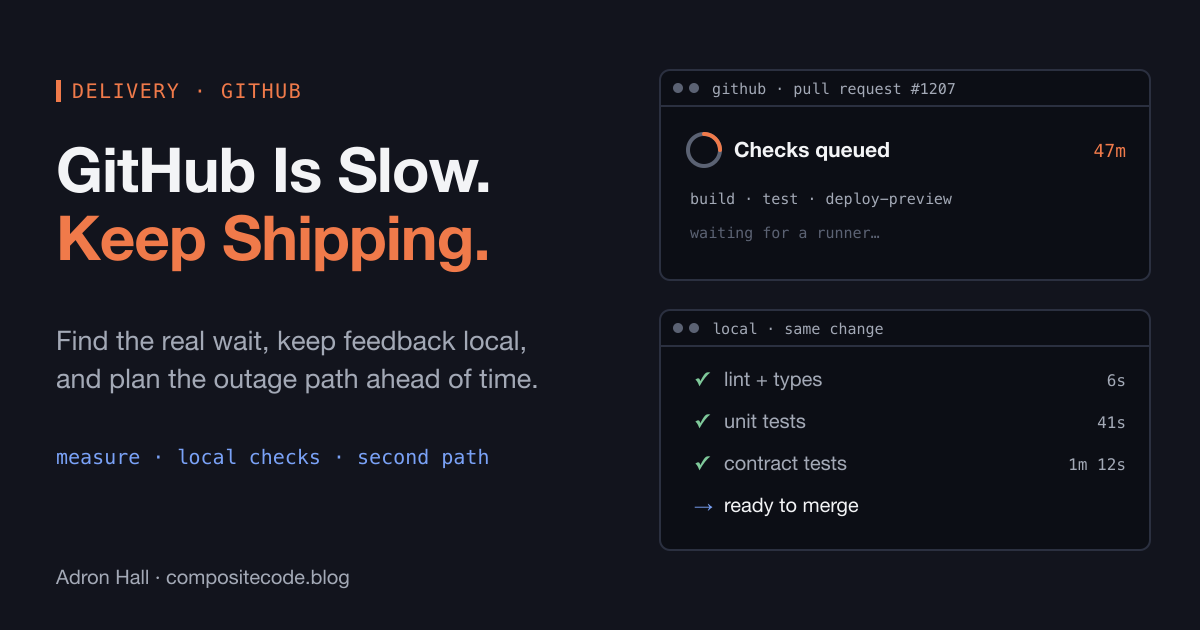
The issue is ready, the code is ready, and then the PR page spins. A check stays queued. A webhook arrives late. The review that should have taken ten minutes turns into an afternoon of refreshing GitHub and wondering which part of the pipeline is actually broken. Continue reading →
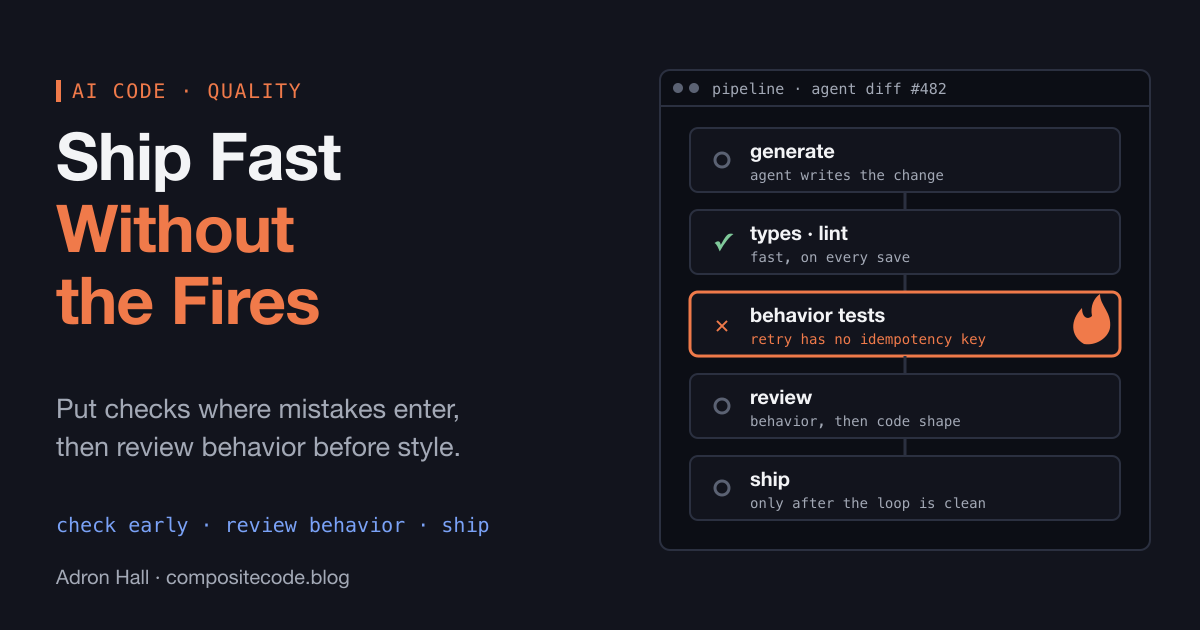
The October 2025 DynamoDB disruption spread through AWS after a race condition in automated DNS management erased the service’s regional endpoint. Its published cause was an automation defect, not AI-written code. That distinction matters. If we blame every outage on an LLM, we miss the specific mechanisms that made the outage possible. Continue reading →
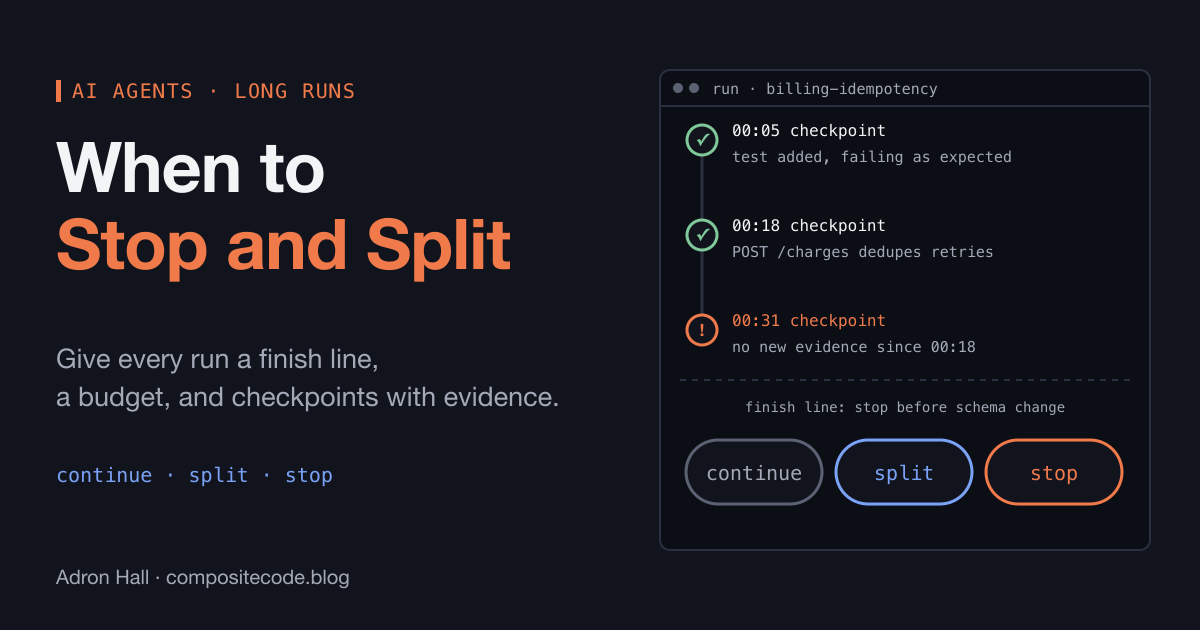
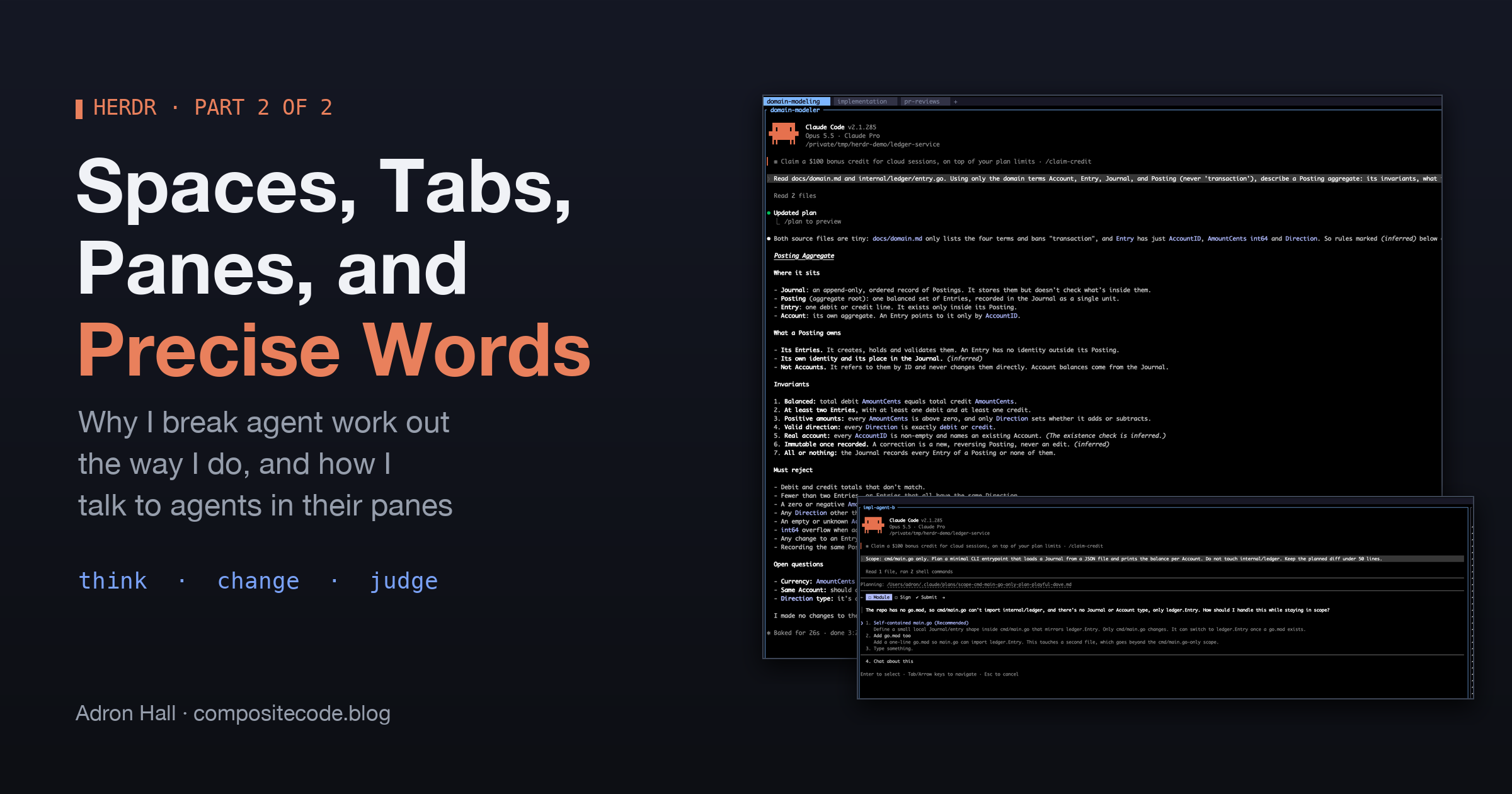
I have written about Herdr as a place to see all the agents and about why I give spaces, tabs, and panes specific jobs. A multiplexer helps me find the agent that is blocked on a question. It does not tell me whether the agent should still be working on that question at all. Continue reading →
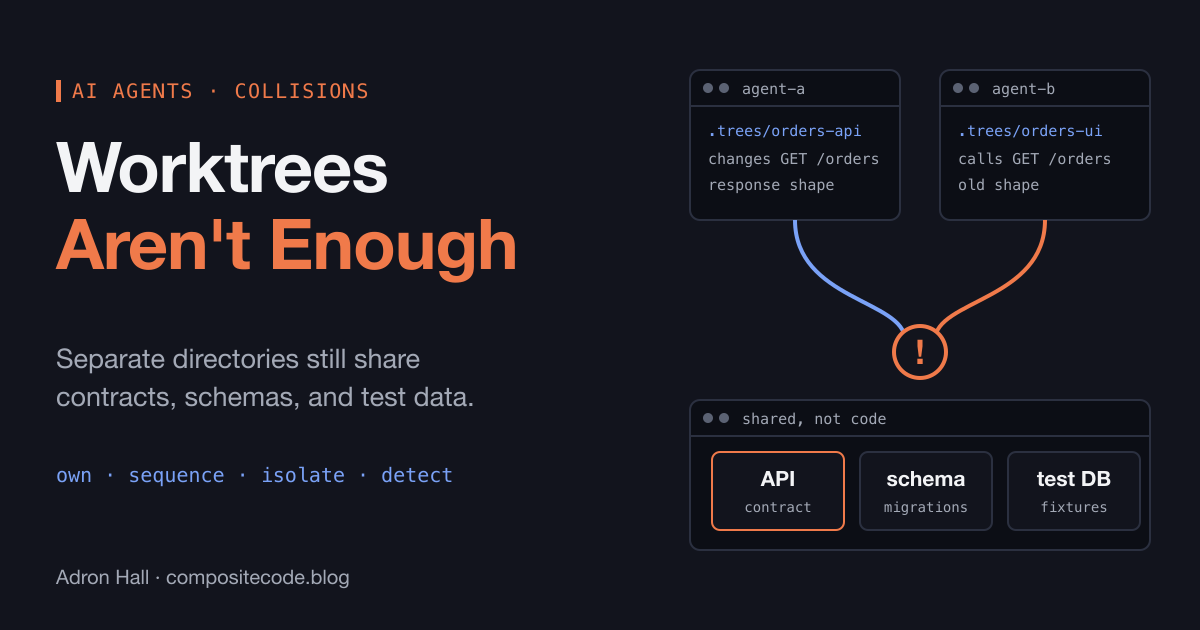
Two developers editing the same service at once is older than Git. One changes an API, the other writes a caller against the old shape. One migration lands, the other assumes the previous schema. The collision may wait until integration, but nobody invented it with coding agents. Continue reading →
In the previous post I toured Herdr and how I lay it out: one space per folder, one tab per kind of work, agents in tall columns, shells in short stacks, all of it spread across a 5120×1440 ultrawide. That’s the what. This one is the why, and then the part that actually decides whether... Continue reading →