January 2013 Meetups: TypeScript, Riak, .NET, JavaScript… re: Calagator

Here’s a few of the meetups I’m going to aim to attend this month. Hope to see some fellow coders there.

PADNUG…

…is having a TypeScript Introduction. There’s a lot of those made up marketing words thrown around in the description such as “Application-Scale JavaScript Development”. Maybe TypeScript is magic, but overall it seems to be suspicious. Also, this talk is about how TypeScript will help you write Windows 8 Apps, so you’ve been warned. The kool-aid will be in effect. If you want to learn more about it, go check out the PADNUG meetup on January the 8th at 6:00pm. Intel Hawthorn Farms 3 (HF3) Campus, 5200 NE Elam Young Parkway, Hillsobor, OR 97124.

Portland Ruby Brigade…

…is having their regular monthly meetup at Crowd Compass. If you want to know more about the topic, material or other information about the user group jump into the Google Group to get started. This is a very fluid and flexible group, sometimes having an open discussion, a presentation or some other type of event. Crowd Compass, 2505 SE 11th Ave, #300, Portland, OR 97202. The location is in the Ford Building, with the easiest access straight in to the Ford Food & Drink.

Portland Riak Users Group…

…will meet at AppFog (as of this time) at 6:30pm on January 28th, more info & address on the meetup page. We have a coder/hacker/databaser by the name of Jeremiah Peschka @peschkaj coming in to tell us about the open source project he and OJ @TheColonial have been working on called Corrugated Iron. Corrugated Iron is a .NET Client for Riak, so holds a lot of potential for .NET shops to get into the distributed database world. So come check out the meetup, we’ll be having pizza and likely a bucket full of beer!

There are others, but these are the events that caught my eye. Check them out, I might see you there and if not, let me know how they go. If you’re looking into some other meetups or events, check out Calagator, the Portland Tech Scene Calendar of events.  🙂

My Year of Coding, Messaging, Learning, Leading, Reconoitering, and Hacking in Photos

Hope you have a little patience, this blog entry is going to be pretty long. There was a multitude of conferences, more than a hundred pair coding sessions, more cities, hotels and other things as I criss crossed the country helping to knock out projects, code, fire off some open source projects and generally get some technology implemented. It has been a spectacular year. I also could add, it has thoroughly kicked my ass and I’ve loved it.

2012 Coding Projects

In 2012 I’ve taken the healm of the Iron Foundry Project which led to the creation of Tier 3 Web Fabric PaaS. A Cloud Foundry & Iron Foundry .NET based PaaS. From there the project led to an expansion of leading the efforts on the Thor Project, which is a Cloud Foundry User Interface for OS-X and Windows 7. Beyond that I’ve contributed to and participated in dozens of different projects in various ways over the year. I finished up this year by joining Basho in December and thus, joined the Riak & related Basho Projects.

Coding Project Aims For 2013

Some of the projects I’ve started, will join or hope to otherwise continue participation in include the following. Here’s to hoping 2013 is a hard core coding and contributing year of excellence!

  • Many of the Basho Organization’s Projects I’ll be diving into, including work around Rebar, Riak, Docs & a number of others.
  • Name Factory – a project I’ve started a while back of Riak + JavaScript around creating massive test data with JavaScript and also using Riak for the storage & searching on that data created.
  • Criollo – Criollo is one of the most common forms of cocoa, is a native OS-X Cocoa User Interface for distributed systems built on or using Riak.
  • SpikeOp – This I’ve dubbed the name of the iOS interface for distributed systems built on or using Riak.
  • I want to use and possibly contribute to Corrugated Iron, the .NET Client for Riak. Prospectively to use for a Windows 8 User Interface for distributed systems built on or using Riak.
  • I’ll continue to maintain and provide support for the Iron Foundry vcap-client Library currently available via Nuget for .NET.
  • Thor Project for Cocoa & Thor .NET for Cloud Foundry & Iron Foundry.
  • Expand on prospective services for Cloud Foundry, either I or efforts I may lead to do this.

…there are others, but they’ll have to be figured out during the course of events. Also, there are an easy dozen other projects I’ll be working that don’t particularly have to do with coding, two are listed below. For an easy way to keep up with the projects I’m coding on, leading, participating in or otherwise hit me up on Twitter @adron or ADN @adron.

Big Project Aims for 2013

Thrashing Code Project – This is sort of, kind of secret. It’s going to happen soon, I have a personal schedule for it and I’ll be releasing information accordingly when the site and twitter account goes live.

Tour Triumvirate – I intend to plan, and hopefully will take at least 2 of the three tech tours I setup. More information will be forthcoming, but the original notion is outlined in the blog entry I wrote titled “The Adron Code Tour, Let’s Hack, Bike and Talk Hard Core Technology“.

Books I’ve Read in 2012

All of these I’ve either read or re-read in 2012. I set a goal at the beginning of last year to get my ass in gear when it comes to reading. A focused, get it read, understood and learn approach. I think I did pretty good overall. Not a book a week, but I’m getting back in gear. Considering my best year of reading was 100+ books, it might be a difficult to reach that again since I’m a working citizen, versus a child with plenty of time on their hands. But, it’s good to have goals.  😉

  • The Clean Coder: A Code of Conduct for Professional Programmers
  • The Rails 3 Way
  • Eloquent Ruby
  • The Economics of Freedom: What Your Professors Won’t Tell You, Selected Works of Frederic Bastiat
  • The Myth of the Robber Barons
  • Excellence Without a Soul: Does Liberal Education Have a Future?
  • Seven Databases in Seven Weeks: A Guide to Modern Databases and the NoSQL Movement
  • Surely You’re Joking, Mr. Feynman!
  • The Innovator’s Dilemma: The Revolutionary Book That Will Change the Way You Do Business
  • The Lean Startup: How Today’s Entrepreneurs Use Continuous Innovation to Create Radically Successful Businesses
  • 8 Things We Hate About IT: How to Move Beyond the Frustrations to Form a New Partnership with IT
  • Smart and Gets Things Done: Joel Spolsky’s Concise Guide to Finding the Best Technical Talent
  • Rework
  • Steve Jobs
  • Eloquent JavaScript: A Modern Introduction to Programming
  • JavaScript: The Good Parts
  • Node for Front-End Developers
  • First Contact (In Her Name: The Last War, #1)
  • Cloudonomics: The Business Value of Cloud Computing
  • The REST API Design Handbook
  • HTML5 Canvas
  • HTML5: Up and Running
  • Triumph of the City: How Our Greatest Invention Makes Us Richer, Smarter, Greener, Healthier, and Happier
  • Traffic

Book Reading Aims for 2013

  • Natural Capitalism
  • How God Changes Your Brain: Breakthrough Findings from a Leading Neuroscientist
  • Discourse on the Method of Rightly Conducting One’s Reason and of Seeking Truth in the Sciences
  • Political Ideals
  • The Autobiography of Benjamin Franklin
  • Wrestling with Moses: How Jane Jacobs Took On New York’s Master Builder and Transformed the American City
  • Bikenomics: An Introduction to the Bicycle Economy
  • Everyday Bicycling: How to Ride a Bike for Transportation (Whatever Your Lifestyle)
  • Just Ride: A Radically Practical Guide to Riding Your Bike
  • Continuous Delivery: Reliable Software Releases through Build, Test, and Deployment Automation
  • Erlang Programming
  • Building Web Applications with Erlang: Working with REST and Web Sockets on Yaws
  • Think Complexity: Complexity Science and Computational Modeling
  • Async JavaScript
  • Smashing Node.js: JavaScript Everywhere (Smashing Magazine Book Series)
  • Windows PowerShell for Developers
  • How to Use the Unix-Linux vi Text Editor
  • Sketching User Experiences: The Workbook
  • Designing Interfaces
  • Information Architecture for the World Wide Web: Designing Large-Scale Web Sites
  • Consider Phlebas
  • Snow Crash
  • How to Change the World: Social Entrepreneurs and the Power of New Ideas
  • Mission, Inc.: The Practitioner’s Guide to Social Enterprise
  • Simply Complexity
  • Complex Adaptive Systems: An Introduction to Computational Models of Social Life (Princeton Studies in Complexity)
  • Thinking In Systems: A Primer
  • Thinking, Fast and Slow
  • Programming in Objective-C
  • Learning iPad Programming: A Hands-on Guide to Building iPad Apps with iOS 5
  • Cocoa Programming for Mac OS X
  • Getting Started with GEO, CouchDB, and Node.js
  • JavaScript Web Applications
  • Suburban Nation: The Rise of Sprawl and the Decline of the American Dream
  • Design Patterns in Ruby

…and the two books I’d like to re-read this year because they’re just absurdly entertaining and I’d like a refresher of the stories.

  • A Confederacy of Dunces (I’ll be reading this for the 2nd time)
  • The Hitchhiker’s Guide to the Galaxy (Yup, just want to read it again)

My 2012 Coder’s Year in Photos

What I’ve put together here is a photo story of the year, hopefully it’s entertaining in some way. With that, here’s a review of the year, cheers and happy new year! 2012 started with one of my last hack sessions as a Seattle Resident at Ruby at Racer weekly meetup.
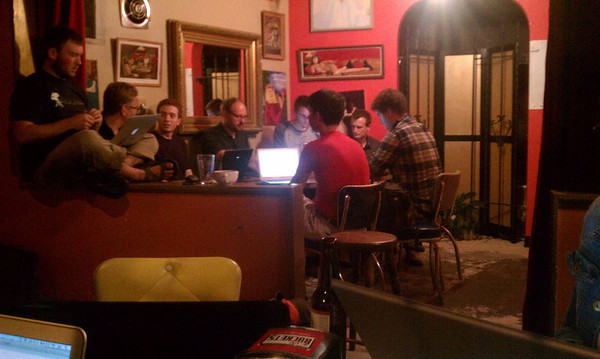
Ruby at Racer Meetup

Ruby at Racer Meetup

Meanwhile some of my last views from Russell Investments. Absolutely beautiful, epic and awe inspiring views of the Puget Sound from the Emerald City of Seattle.

View from Russell Investments Seattle Headquarters, stunning!

View from Russell Investments Seattle Headquarters, stunning!

Then a fitting image, from the business meeting floor of the same building, the settings sun for my departure.

Overlooking the Puget Sound, Japanese Garden in the forefront from the Russell Investments Building in Seattle.

Overlooking the Puget Sound, Japanese Garden in the forefront from the Russell Investments Building in Seattle.

February of 2012 kicked of with my return to Portland, Oregon. Stumptown regularly welcomed me back more than a few moments.

Stumptown Morning Brew

Stumptown Morning Brew

One of the first meetups I attended back in Portland was the DevOps Meetup.
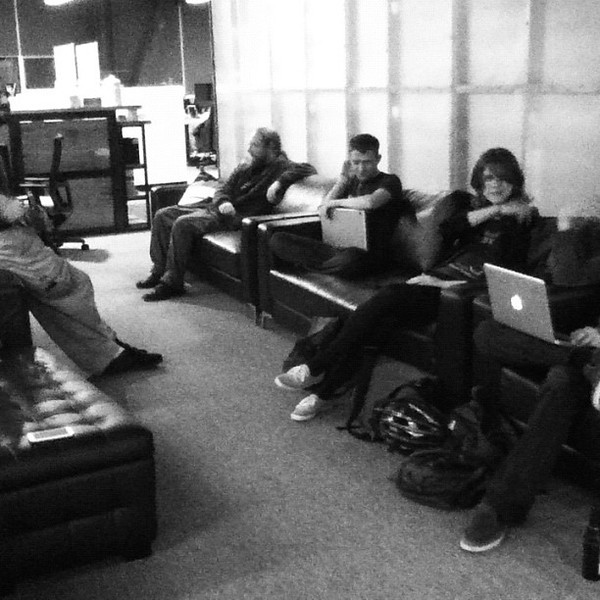
DevOps DevOpers Hanging around pre-meeting at PuppetLabs in Portland.

DevOps DevOpers Hanging around pre-meeting at PuppetLabs in Portland.

That DevOps meetup just happened to have a session on one of the code bases I was working with, Cloud Foundry.
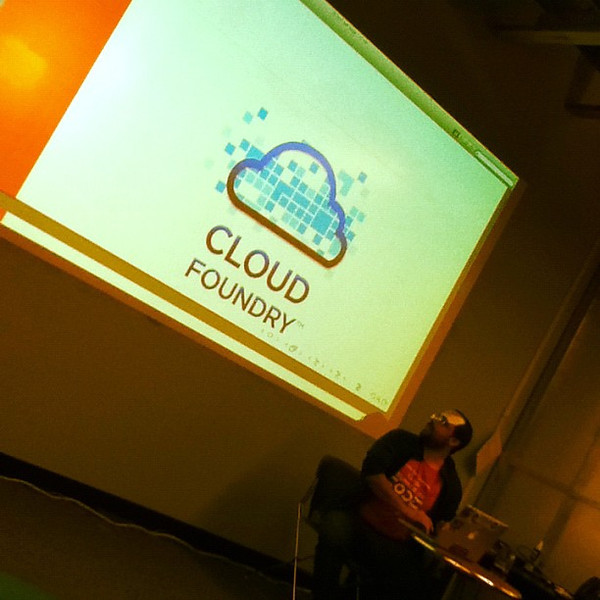
Cloud Foundry preso on how the pull requests and such where going to be built into a process, which still today is rather cumbersome for community involvement. However, it's still moving forward, albeit at a slower pace than it could if it was streamlined around github instead of github being an

Cloud Foundry preso on how the pull requests and such where going to be built into a process, which still today is rather cumbersome for community involvement. However, it’s still moving forward, albeit at a slower pace than it could if it was streamlined around github instead of github being an “end point” read only repository…

While my move consisted of many a couch, as I just couch surfed for the first 45 or so days I was back in Portland, I finally moved into a place at the Indigo in downtown.
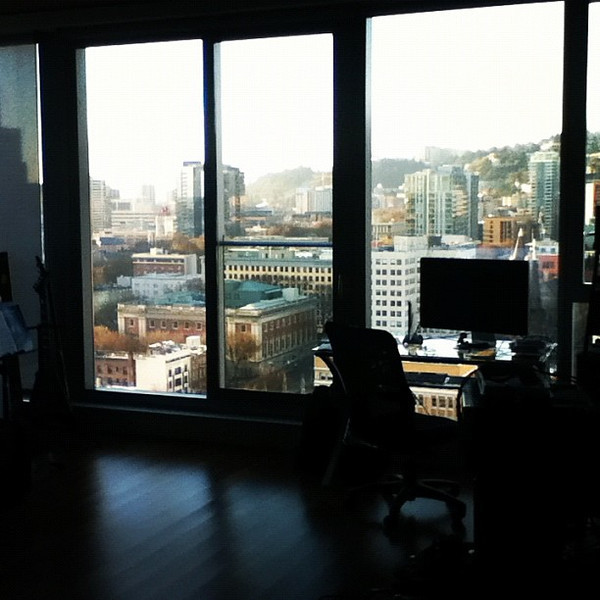
My New Place, priorities as they are my system sits in the corner ready for use.

My New Place, priorities as they are my system sits in the corner ready for use.

The new system, albeit a great Christmas present from 2011, became the defacto work system of 2012 and remains one of my top machines. Mac Book Air w/ 4GB RAM, i5 Proc, 256 GB SSD. Not a bad machine.
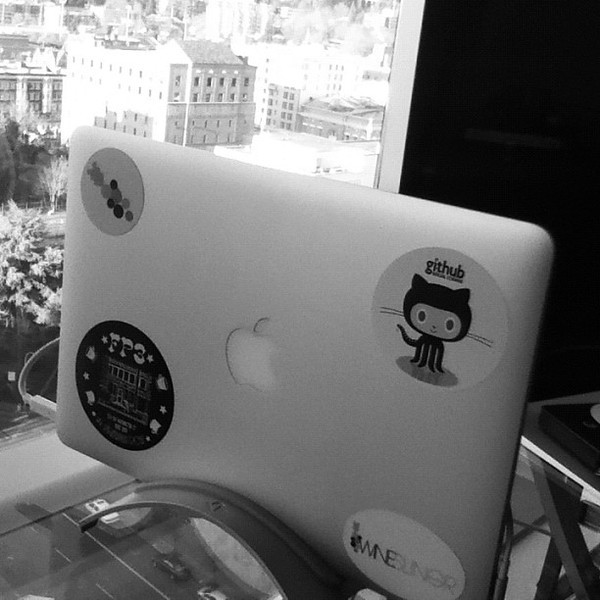
2011 Mac Book Air, settled into it's workspace cradle.

2011 Mac Book Air, settled into it’s workspace cradle.

A view from on high, looking down upon the streets of San Francisco from the New Relic Offices. Thanks for the invite and the visit, it was great meeting the great team at New Relic San Francisco!

New Relic San Francisco View

New Relic San Francisco View

Getting around on my first trip to San Francisco of 2012. Thanks to John, Bjorn, Bill, John and the whole team in Portland and San Francisco for the invite. Great talking to you guys.

MUNI Streetcar FTW!

MUNI Streetcar FTW!

On the same trip it began pouring rain as I’d never seen before in San Francisco. I sat by Duboche Park, staying warm and away from drowning! Arriving outside was one of the MUNIs that eventually I was rescued by from the torrential floods and returned to downtown, dry and intact!
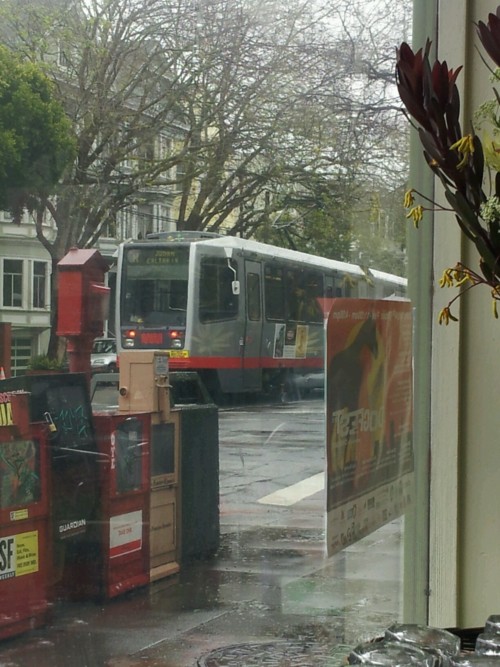
MUNI to the rescue on the torrential downpour of the year in San Francisco.

MUNI to the rescue on the torrential downpour of the year in San Francisco.

…and Julia thanks for the tour around San Francisco and the extra tasty lunch at EAT!! Good times!
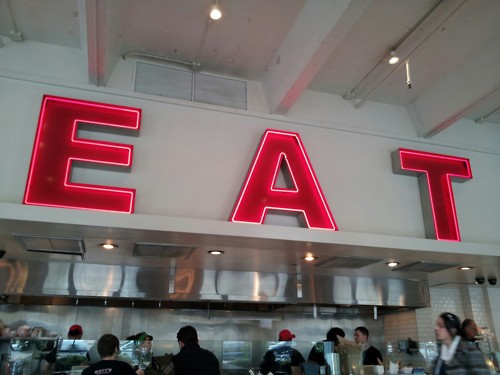
Eating at the EAT sign!

Eating at the EAT sign!

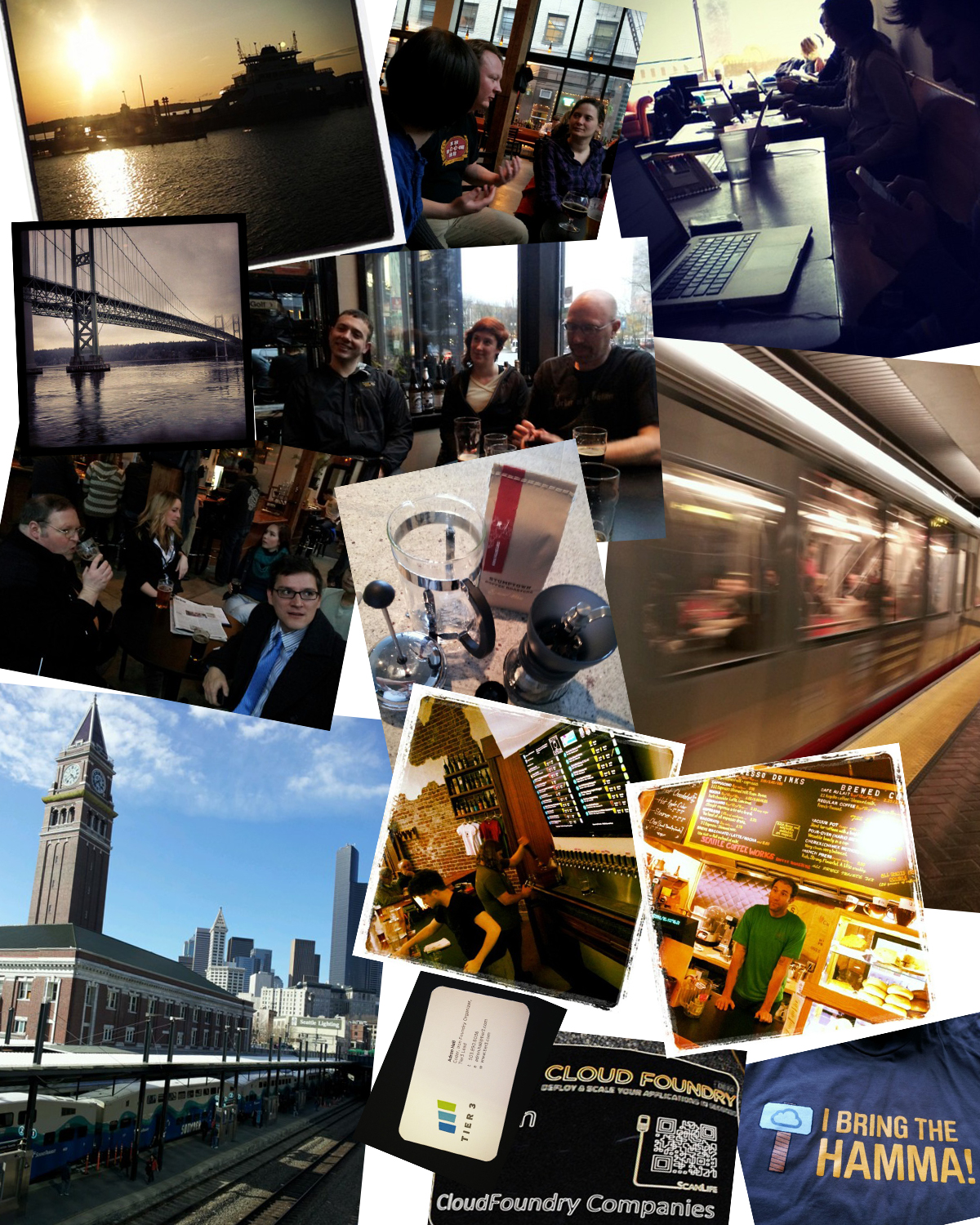
Amidst all these images, I threw together some into a collage. There are a number of awesome coders & hackers of all sorts in these images. Shout out to Jerry Sievert, Eric Sterling,
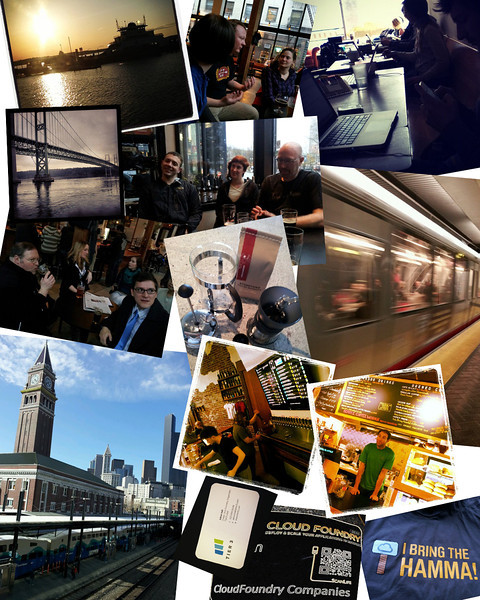
Snikies, a collage I made!!!! (This one you can click on for a full size image)

Snikies, a collage I made!!!! (This one you can click on for a full size image)

…and alas I’ll have another zillion images and such as we all roll into 2013 and onward. Cheers! For some more new years posts I’ve found useful check out this list, which I’ll be adding to over the next few days.
Distributed Coding Prefunc: Up and Running With Erlang

Erlang LogoBefore diving into architecture, coding, descriptions and other things related to distributed computing over the coming months. It helps to become familiar with a language like Erlang. I’m going to dive immediately into getting Erlang up and running before any theory, description or otherwise, so following the most direct installation…

Installing Erlang

This is easy on OS-X. Pending of course you have the XCode and Developer Tools installed.

curl -O http://erlang.org/download/otp_src_R15B01.tar.gz
tar zxvf otp_src_R15B01.tar.gz
cd otp_src_R15B01

Then compile the latest XCode and tools you can use the LLVM Compiler.

CFLAGS=-O0 ./configure --disable-hipe --enable-smp-support --enable-threads \
--enable-kernel-poll --enable-darwin-64bit
make
sudo make install

For more information on building Erlang you can also check out the Erlang Organization Site. It’s that simple, so now that it is up and running you should be able to check that all is right with the install by pulling a version.

erl -version

In my follow up blog entry I’m going to take you through the Rebar Riak Core Templates. This will get you up and running with an Erlang Application. This application can then be used either as a stand alone Erlang App for whatever you want to build with it or as a great starting point to build against Riak.

Cloud Computing and Distributed Computing, Something is Broken

First off, I’m going to start off with some definitions to clarify things for this conversation.

Cloud Computing, in general, has been perverted to mean almost anything available for sale today in technology. It’s rhetorically stupid. But we all still use the term to some degree. Going back to cloud computing at the core, we’re talking about systems, virtually managed and often distributed. Distributed geographically with no single real point of failure. Almost every cloud computing enabled site or system these days are a complete lie when it comes to geographically dispersed, cloned nodes with no real point of failure, that is resilient to outages and related problems.

Distributed Systems, this is a term that is not contorted or misused – albeit at this moment in time. There’s always possibilities that the media completely botches it up later. But right now, distributed computing, distributed databases and distributed systems generally refers to what cloud computing used to sort of mean. So here’s some specific definitions of distributed technology.

  • Distributed computing refers to the use of distributed systems to solve computational problems. In distributed computing, a problem is divided into many tasks, each of which is solved by one or more computers, which communicate autonomously. ref: http://en.wikipedia.org/wiki/Distributed_computing
  • A distributed database is a database in which storage devices are not all attached to a common processing unit such as the CPU. It may be stored in multiple computers located in the same physical location, or may be dispersed over a network of interconnected computers. Unlike parallel systems, in which the processors are tightly coupled and constitute a single database system, a distributed database system consists of loosely coupled sites that share no physical components.Collections of data (e.g. in a database) can be distributed across multiple physical locations. A distributed database can reside on network servers on the Internet, on corporate intranets or extranets, or on other company networks. The replication and distribution of databases improves database performance at end-user worksites.To ensure that the distributive databases are up to date and current, there are two processes: replication and duplication. Replication involves using specialized software that looks for changes in the distributive database. Once the changes have been identified, the replication process makes all the databases look the same. The replication process can be very complex and time consuming depending on the size and number of the distributive databases. ref: http://en.wikipedia.org/wiki/Distributed_database

So these definitions provide a basis for my next topic point and frustration with the current state of “cloud computing” providers. To summarize what this problem I have is, it simply is that almost every provider continues to perpetuate legacy client to server, or server heavy with a RDBMS or single point of failure database on the back end. This is completely missing the advantages of cloud computing in so many ways. The high availability, the resiliency, the performance of scaling by adding nodes versus other vastly more expensive means. One of those standard means is throwing away one machine to get a bigger more powerful machine, which has distinct and clear limitations. Let’s look at some specific examples that are encouraged by the providers.

The Failures in Cloud Computing & Distributed Systems

SharePoint – I’m not picking on SharePoint in this particular scenario because of its notoriously poor user experience or worse developer experience, I’m calling it out for a single point of failure architecture. Sharepoint doesn’t rely on a distributed database. It also can’t be easily installed in any easy way on multiple web application servers to share load. Even if it was, the relational database holds very distinct and specific limitations that cannot be overcome. In large environments it must be sharded at an application level, so in large corporations with heavy usage the system runs into all sorts of complex bottlenecks and performance nightmares.

Standard RDBMS + Web App – This is a very common database configuration which, if kept in a RDBMS dramatically raises data storage cost for any site that needs scaled. The largest problem with scaling, is that an RDBMS is setup for vertical scale improvements, in other words the “buy a bigger machine with more resources” solution. This is not very ideal if you want to actually maintain high availability. In all actuality, having an RDBMS alone as the primary data repository is probably one of the worst existing and continually encouraged architectural decisions made for any website that may one day need to scale.

CRMs and Other ERP, Single Repo Mail Servers – This list is huge. Whether it is Exchange attached to a proprietary data store, stuck on top of Oracle, or glued to some sharded database or data store of sorts it is another bad implementation of distributed computing resources. CRMs almost always sit on top of some relational database that is geographically bound. Another one that is a huge problem is ERP tooling in general. These frequently sit on top of price coupled, proprietary databases like Oracle or SQL Server, with no clear scaling plan except to just “wait for it to process” types of situations. Many large corporations end up having to work around these problems with massively expensive custom solutions of these products, especially when you’re employee count is over 50k, which there are more than a few of those out there.

The Future

So don’t be fooled into thinking you’re getting some “cloud solution” with these solutions using traditionally designed architectures. The solutions of the future will be distributed, utilizing the computing grid better, and prospectively cheaper in many ways. Whatever the case the marketing push for the cloud has become worthless, and if you’re looking for the real power in computing these days you’ll look into distributed systems and how those work for you. There’s massive potential in properly distributing systems and building out applications accordingly, much of this potential has only begun to be tapped.

Un-breaking OS-X Mountain Lion

I posted a blog entry about my efforts last week, which included a rather frustrating experience with a freshly loaded OS-X Mountain Lion install. I had installed XCode and eventually got the Command Line Tools installed, which I outlined in the entry. Things seemed to be working ok, and for the most part in doing other things all is good, but when trying to install middleman and by reference blockenspiel I ran into an issue getting the C compiler (or any of the compilers I tried) to build the native extensions that were included in this gem. Here’s what I installed and did to finally – FINALLY – get things running right.

The first thing, since it kept coming up, was to get Homebrew installed.

ruby -e "$(curl -fsSkL raw.github.com/mxcl/homebrew/go)"

I’d already installed RVM, which consists of either the JewelryBox or

$ \curl -L https://get.rvm.io | bash -s stable --ruby

After that I installed Ruby 1.9.3p327.

rvm install 1.9.3

You can check the RVM and Ruby versions by using the -v switch. Also to verify what ruby versions you actually have installed with RVM you can use the list command.

Adron$ ruby -v
ruby 1.9.3p327 (2012-11-10) [x86_64-darwin12.2.0]
Adrons-MacBook-Air-2:~ Adron$ rvm -v

rvm 1.17.2 (stable) by Wayne E. Seguin <wayneeseguin@gmail.com>, Michal Papis <mpapis@gmail.com> [https://rvm.io/]

papis@gmail.com> [https://rvm.io/]

Adron$ rvm list

rvm rubies

=* ruby-1.9.3-p327 [ x86_64 ]

# => -- current
# =* -- current && default
#  * -- default

When I ran ‘rvm requirements’ the current readme doc that is displayed covers a lot of the problems I’ve noticed. It seems there is all sorts of stupid issues between the GCC Compiler and XCode and blagh blagh blagh somebody didn’t even check our stuff before we shipped. This actually goes into detail about what the issues could be if you too have run into this problem.

To use an RVM installed Ruby as default, instead of the system ruby:

    rvm install 1.8.7 # installs patch 357: closest supported version
    rvm system ; rvm gemset export system.gems ; rvm 1.8.7 ; rvm gemset import system.gems # migrate your gems
    rvm alias create default 1.8.7

And reopen your terminal windows.

Xcode and gcc:

Right now Ruby requires gcc to compile, but Xcode 4.2 and later no longer ship with gcc. Instead they ship with llvm-gcc (to which gcc is a symlink) and clang, neither of which are supported for building Ruby. Xcode 4.1 was the last version to ship gcc, which was /usr/bin/gcc-4.2.

Xcode 4.1 and earlier:
-- Ruby will build fine.

Xcode 4.2 and later (including Command Line Tools for Xcode):
-- If you have gcc-4.2 (and friends) from an earlier Xcode version, Ruby will build fine.
-- If you don't have gcc-4.2, you have two options to get it:
 * Install apple-gcc42 from Homebrew
 * Install osx-gcc-installer

  Homebrew:

  If you are using Homebrew, you can install the apple-gcc42 and required libraries from homebrew/dupes:

      brew update
      brew tap homebrew/dupes
      brew install autoconf automake apple-gcc42
      rvm pkg install openssl

  Xcode 4.2+ install or/and Command Line Tools for Xcode is required to provide make and other tools.

  osx-gcc-installer:

  If you don't use Homebrew, you can download and install osx-gcc-installer: https://github.com/kennethreitz/osx-gcc-installer.

  Warning: Installing osx-gcc-installer on top of a recent Xcode is known to cause problems, so you must uninstall Xcode before installing osx-gcc-installer. Afterwards you may install Xcode 4.2+ or Command Line Tools for Xcode if you desire.

  ** NOTE: Currently, Node.js is having issues building with osx-gcc-installer. The only fix is to install Xcode over osx-gcc-installer.

If you need to uninstall XCode you’ll have to follow the directions for each specific version you may have. However for 4.5.2 the steps are as follows.

sudo <Xcode>/Library/uninstall-devtools --mode=all

I wrapped up the current changes and those listed above as follows to see if I could get a good build.

sudo chown -R `whoami` /usr/local
brew update
brew tap homebrew/dupes
brew install apple-gcc42

At the end of all this, still problems. Apple completely screwed the Ruby Community on this one. But really, at the end of the day, the message is don’t frikkin’ install XCode before you get an appropriate gcc installer on your machine. At this point…

I did the unthinkable. I gave up and nuked my machine, loading OS-X back on with a completely fresh installation that has now XCode on it. I went through all of these steps again, minus installing XCode out of order and guess what…

Everything worked.

Computers, ugh!

Until next time, good luck with your install.