Introducing Siyu Yang > @yangsiyu_ < presenting “Deep Learning for Computer Vision with Applications for Wildlife Conservation”.
Siyu is a data scientist at the AI for Earth program at Microsoft focusing on developing machine learning enabled solutions to aid environmental conservation efforts at university labs, startups, non-profits, and government agencies. Before joining this team, she worked on data powered code completion tools at Visual Studio.
At the AI for Earth program at Microsoft, we find new ways to use machine learning to solve global environmental challenges. This talk is an overview of several problems in wildlife conservation where computer vision is poised to make a significant impact. We will survey three different problems in this space: species classification from handheld photos, automated camera trap image processing, and animal detection from aerial imagery. For each area, we will discuss (1) why this problem is challenging from a computer vision perspective, (2) why solving this problem can support conservation, and (3) the data sets we’re working with and the models we’ve built to address this problem. The talk will also include a demo of the AI for Earth Species Classification API and the Camera Trap Animal Detection API.
What will attendees learn:
Find out what Microsoft’s AI for Earth program is all about
Understand how data, particularly visual data, is used by wildlife biologists for conservation.
Experience through live demos how computer vision techniques can bring value to people working with such data, and understand our plan to deploy these technologies.
Introducing Amy Hodler > @amyhodler < presenting “Improving ML Predictions with Connected Feature Extraction”.
Amy is a network science devotee and AI and Graph Analytics Program Manager at Neo4j. She promotes the use of graph analytics to reveal structures within real-world networks and predict dynamic behavior. Amy helps teams apply novel approaches to generate new opportunities at companies such as EDS, Microsoft, Hewlett-Packard (HP), Hitachi IoT, and Cray Inc. Amy has a love for science and art with a fascination for complexity studies and graph theory.
One of the most practical ways to improve our machine learning predictions right away is by using graphs for connected features. You’ll learn how graph algorithms can provide more predictive features as well as aid in feature selection to reduce overfitting.
In this session, you’ll hear about a link prediction example for collaboration with tips on training and evaluating a model using Neo4j and Spark. We’ll compare several models and show measurable improvements in accuracy, precision, and recall by folding in graph-based features.
Introducing Melissa Santos > @ansate < presenting “YOU Can Predict the Future?”.
Melissa has been working with computers and data since 2000, in fields from security to marketing to geography. She has a PhD. in Applied Math and considers herself both a statistician and a data scientist. Currently she is a data analyst at Pingboard, helping understand the customers and how they use the product.
Let’s get started with forecasting! We’ll look at simple linear trends, polynomial fits, ARIMA models, and using Facebook’s Prophet library. The goal is to introduce you to forecasting and help you try modeling the future. We will also look at goodness-of-fit measures so we can compare our models.
Vice President of Engineering for Platform Architecture at DocuSign. I am responsible for the internal advanced analytics data platform as well as applied machine learning for both internal efficiency for sales, marketing and customer success and external intelligent features. Big things are coming!
Previously…
Founder and CTO of Appuri [Acquired by DocuSign in December 2017]. Appuri is a Customer Data Platform that enables Software as a Service (SaaS) businesses to maximize their retention, engagement and revenue. Appuri captures and connects behavioral data from your website and mobile applications and combines it with other sources such as transactional data and 3rd party demographic augmentation.
This talk covers the data engineering, feature extraction, and the processing for predicting future user behavior. By the end of the presentation, you should have a direction to explore if you are building your own system as well as some concrete patterns that we found worked for us.
We will use real-world examples for B2B SaaS churn prediction, but this talk is equally applicable to predicting any type of outcome that is correlated with user behavior such as conversion to a paying customer, upsell to additional products, etc.
We will present lessons learned from several iterations of productizing a system that can take product usage user telemetry events (from Mixpanel, Amplitude, Heap, homegrown, etc) and combine that with business objects (Salesforce) and the application database. We will include some mistakes we’ve made along the way.
Introducing Hannes > @hanneshapke < presenting “MLOps for non-DevOps folks, a.k.a. “I have a model, now what?!”“.
Machine learning has been fascinating to Hannes for many years. He is currently the VP of Engineering and AI at Caravel, an AI-powered shopping platform built for eCommerce stores. Before joining Caravel, Hannes was a Senior Data Engineer at Cambia Health Solutions and a Machine Learning Engineer at Talentpair, Inc. He is a Google Developer Expert for Machine Learning. At the moment, Hannes is working on his second machine learning publication with O’Reilly Media focusing on Machine Learning Workflows.
The prospect of developing and training machine learning models on datasets is exciting. While many conference attendees understand the potential value of deploying machine learning models and may even have a model in mind, not all are aware of the frameworks and tools to needed release them in the real world.
This talk will present an applicable framework to bring attendees’ machine learning models to life. Hannes will introduce the audience to tools including Tensorflow Serving and Google ML Engine and discuss them in the context of other popular serving applications such as Kubeflow, AWS Sagemaker, and Azure Machine Learning. He’ll guide the audience through a sample (live) deployment and highlight things to watch out for, such as scaling and costs, as well as the pitfalls of model versioning.
Attendees will leave the talk familiarized with popular approaches to machine learning model deployment, as well as an actual framework they can use to deploy their models for the greater good for the world.
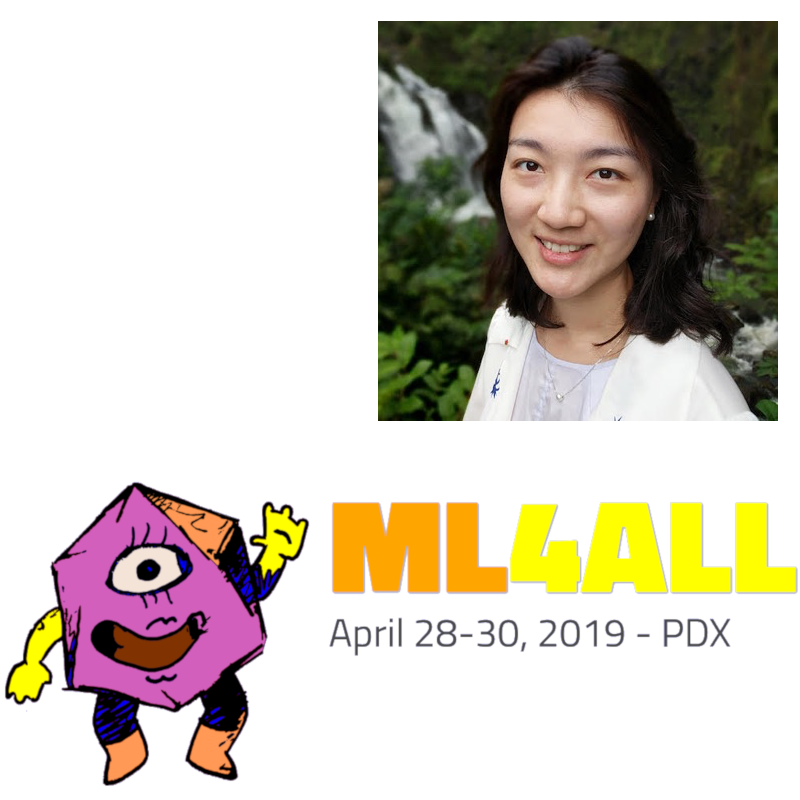
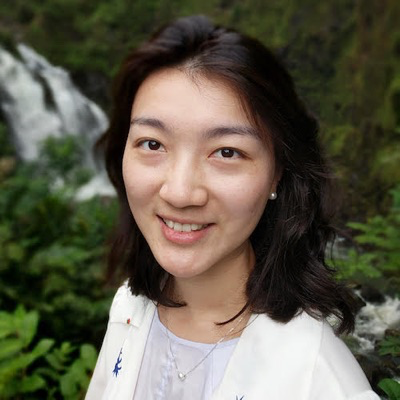 Introducing Siyu Yang > @yangsiyu_ < presenting “Deep Learning for Computer Vision with Applications for Wildlife Conservation”.
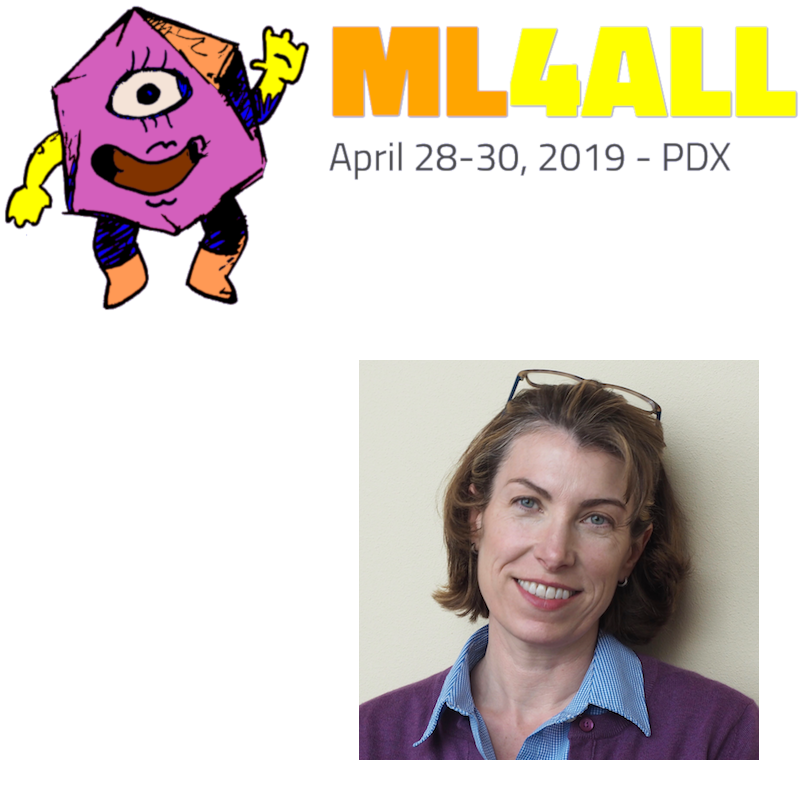
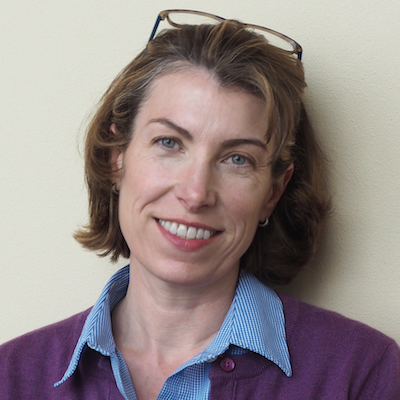 Amy is a network science devotee and AI and Graph Analytics Program Manager at Neo4j. She promotes the use of graph analytics to reveal structures within real-world networks and predict dynamic behavior. Amy helps teams apply novel approaches to generate new opportunities at companies such as EDS, Microsoft, Hewlett-Packard (HP), Hitachi IoT, and Cray Inc. Amy has a love for science and art with a fascination for complexity studies and graph theory.
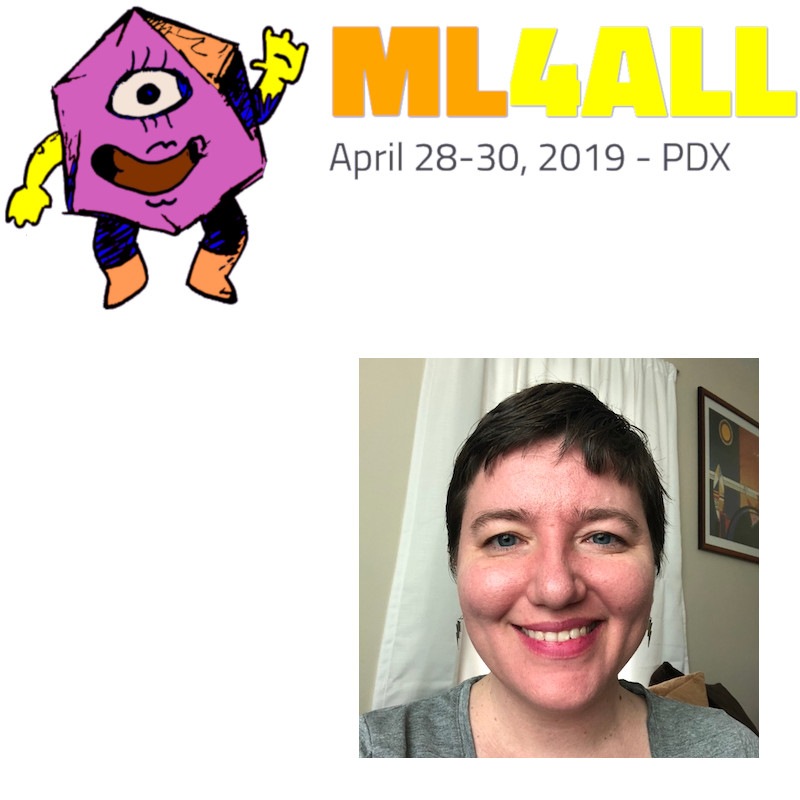
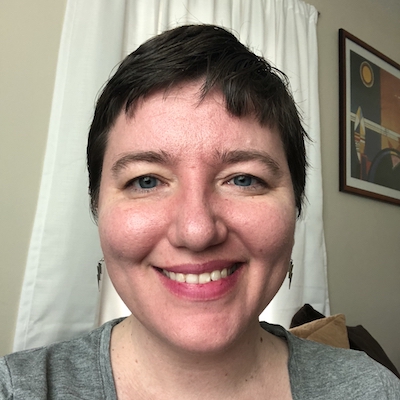 Melissa has been working with computers and data since 2000, in fields from security to marketing to geography. She has a PhD. in Applied Math and considers herself both a statistician and a data scientist. Currently she is a data analyst at Pingboard, helping understand the customers and how they use the product.
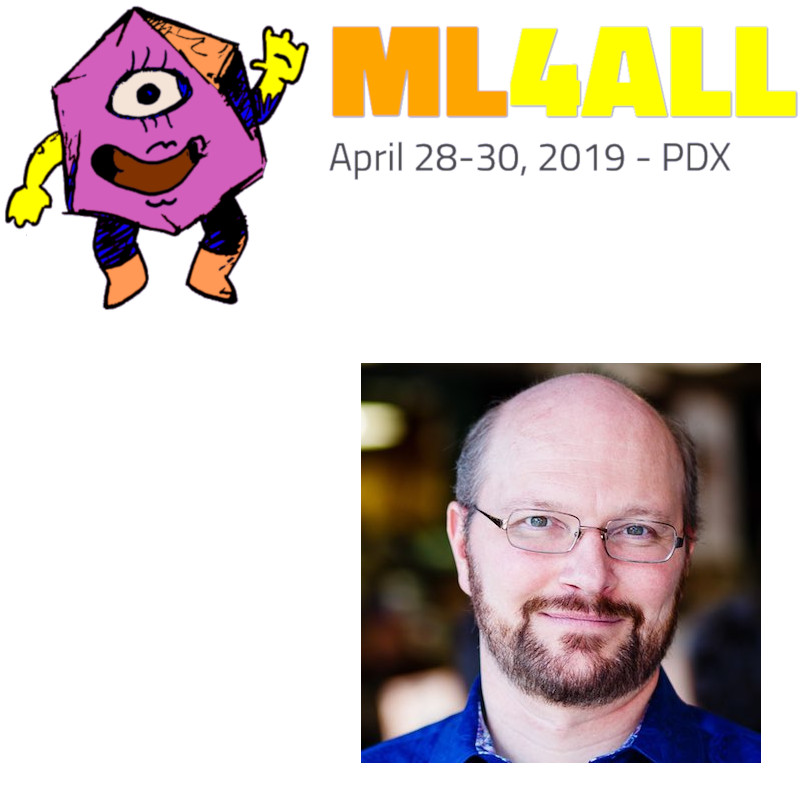
 Vice President of Engineering for Platform Architecture at DocuSign. I am responsible for the internal advanced analytics data platform as well as applied machine learning for both internal efficiency for sales, marketing and customer success and external intelligent features. Big things are coming!
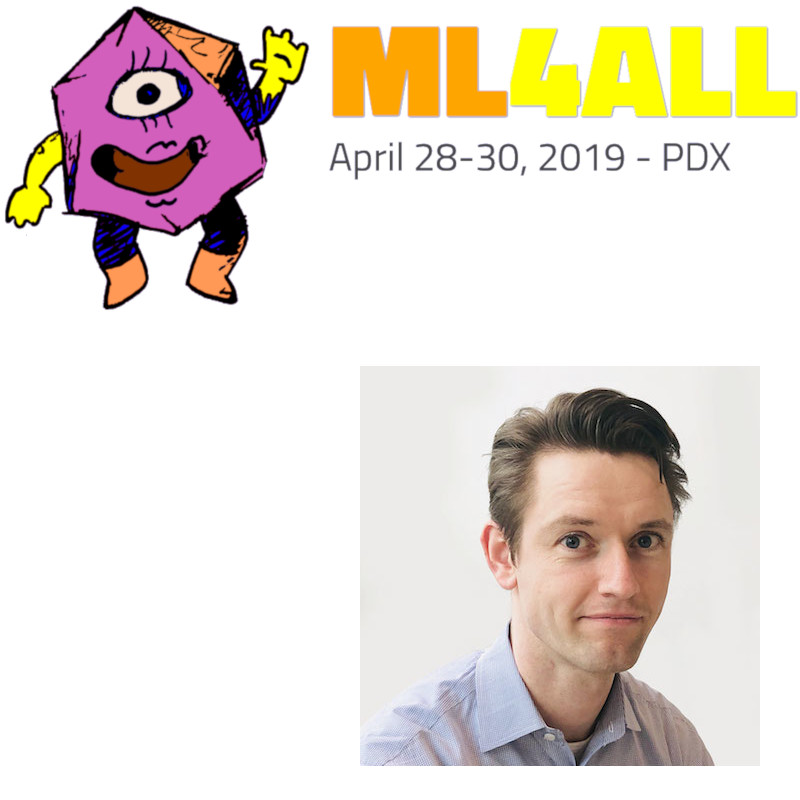
 Machine learning has been fascinating to Hannes for many years. He is currently the VP of Engineering and AI at Caravel, an AI-powered shopping platform built for eCommerce stores. Before joining Caravel, Hannes was a Senior Data Engineer at Cambia Health Solutions and a Machine Learning Engineer at Talentpair, Inc. He is a Google Developer Expert for Machine Learning. At the moment, Hannes is working on his second machine learning publication with O’Reilly Media focusing on Machine Learning Workflows.